004 – Olinda, giants and bonecos together at carnival
Olinda and Recife (Pernambuco, Brazil) · February 2002
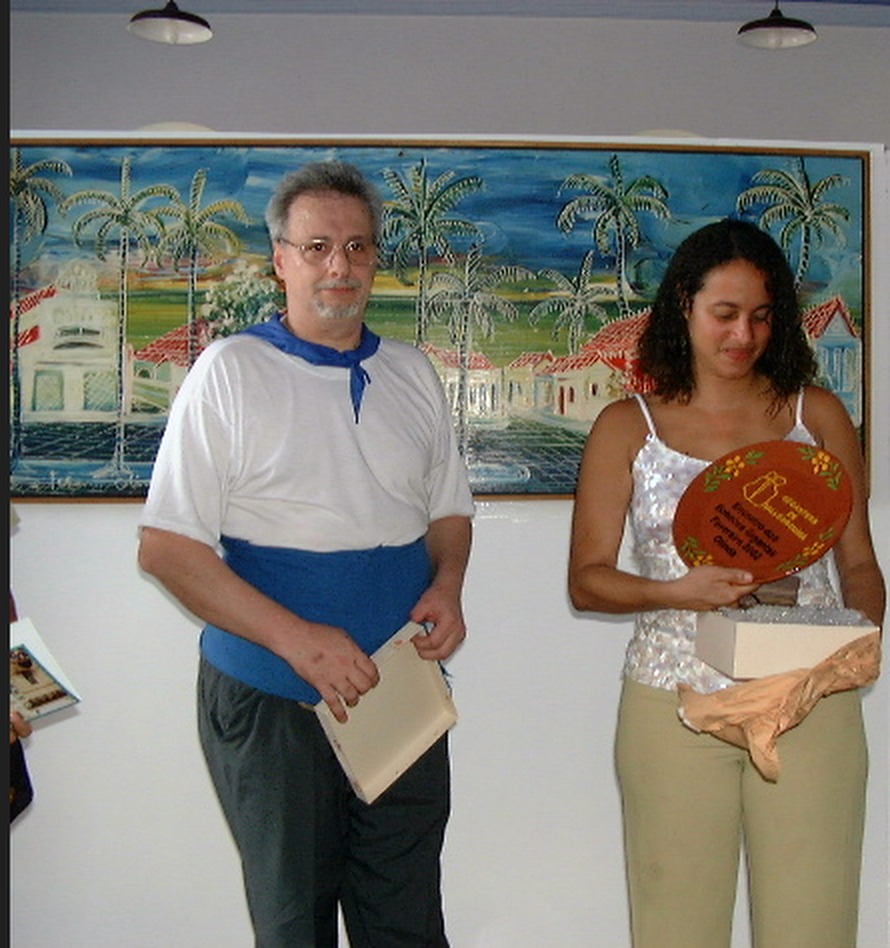
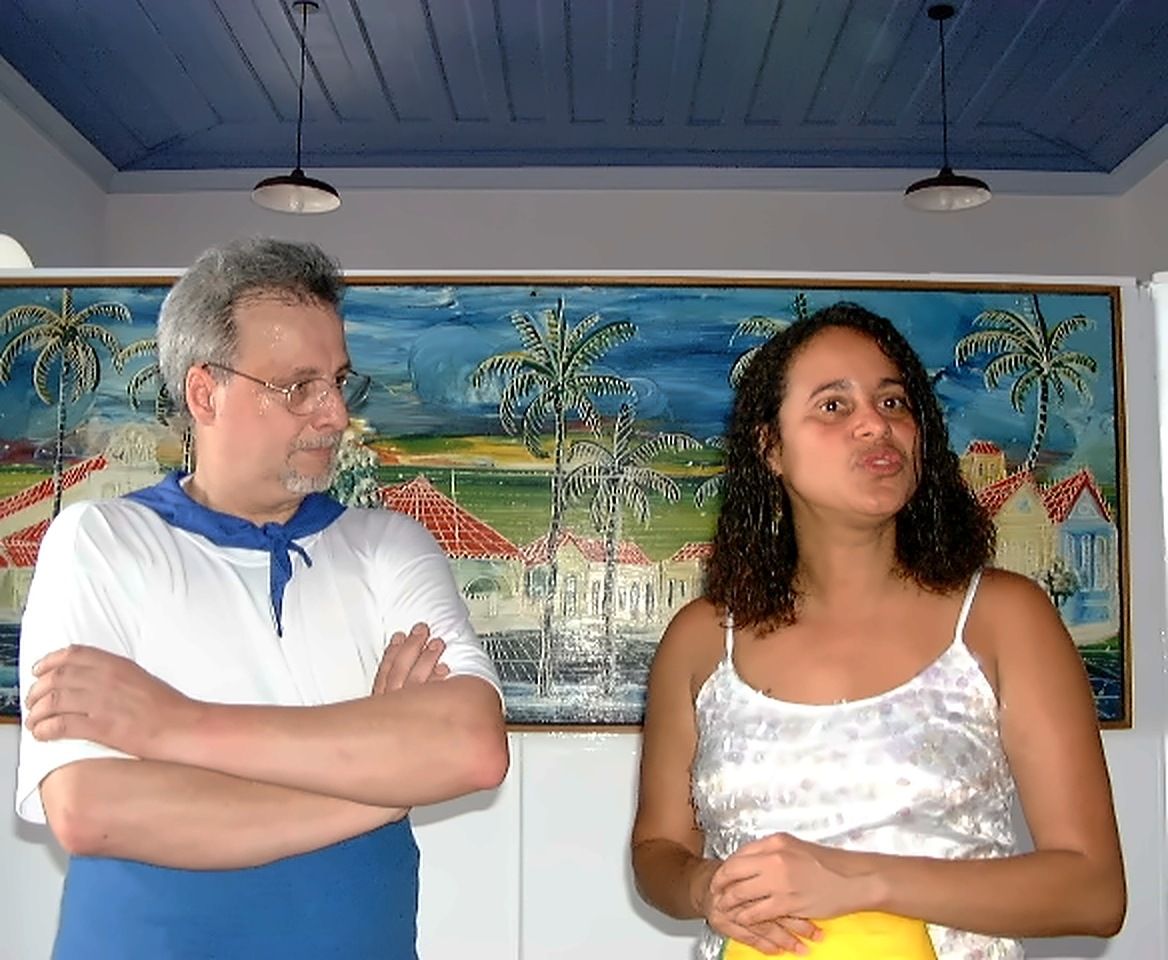
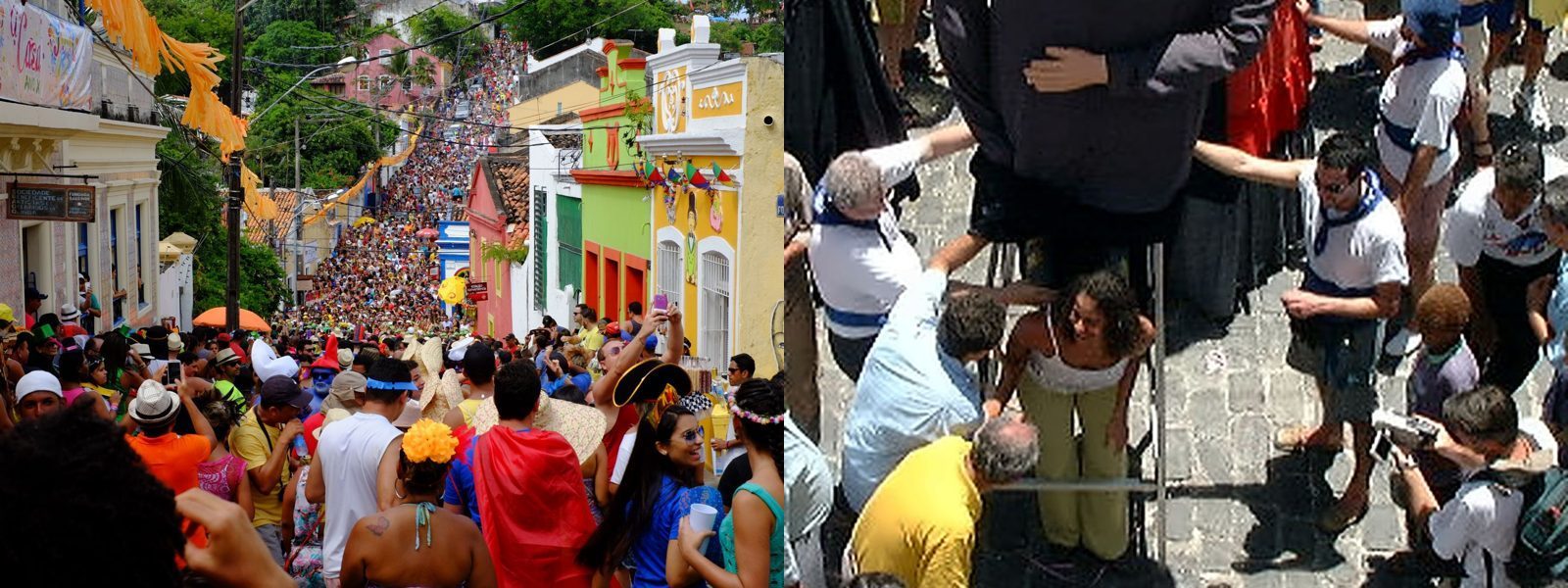 Photo on the left: Raul / Wikimedia Commons, CC BY 2.0
▶ Watch it on video
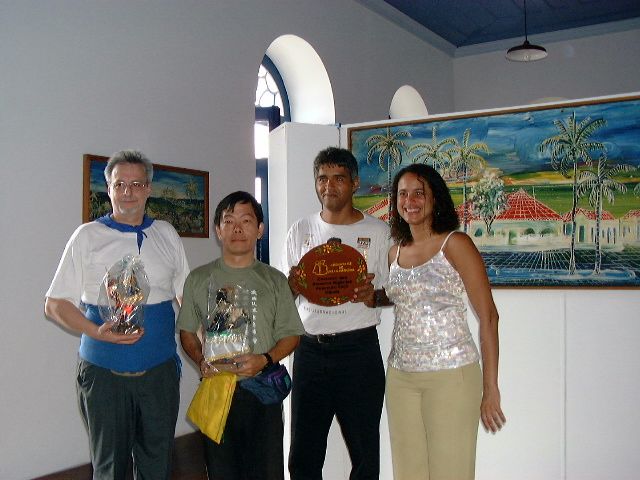
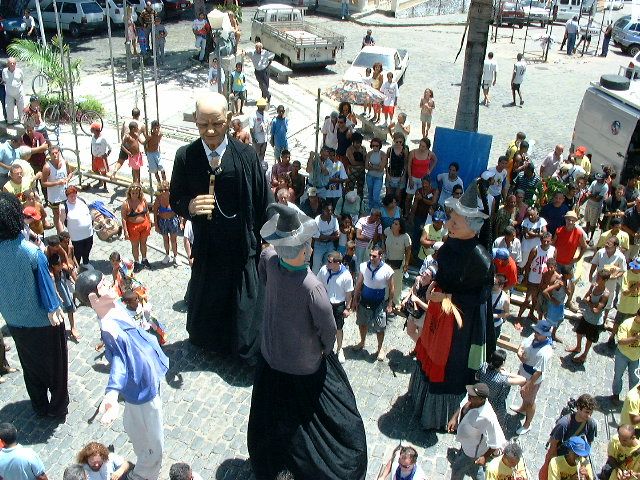
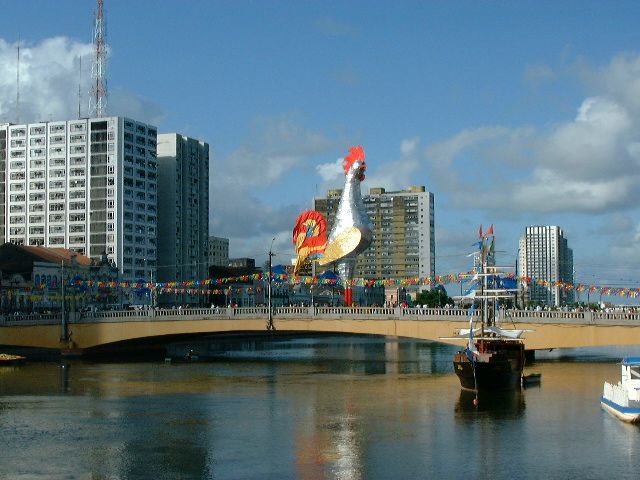
Four moments from the 2002 trip, and the full video on YouTube.
👉 Full video «Olinda, year 2002» on YouTube (channel of the Geganters de Vallgorguina)
🌍 Want to see more giants from around the world? altigran.org →
2Introduction
It all began with a few contacts with Hilário, head of the Troça Carnavalesca Barbapapa of Olinda. When we saw the atmosphere there, we got excited about going ahead with the exchange, with all the infrastructure it needed, above all to take the giants there in a container. About 25 of us went, members of the Geganters de Vallgorguina and guests, in February 2002.
🔍 Tap a photo to see it larger.
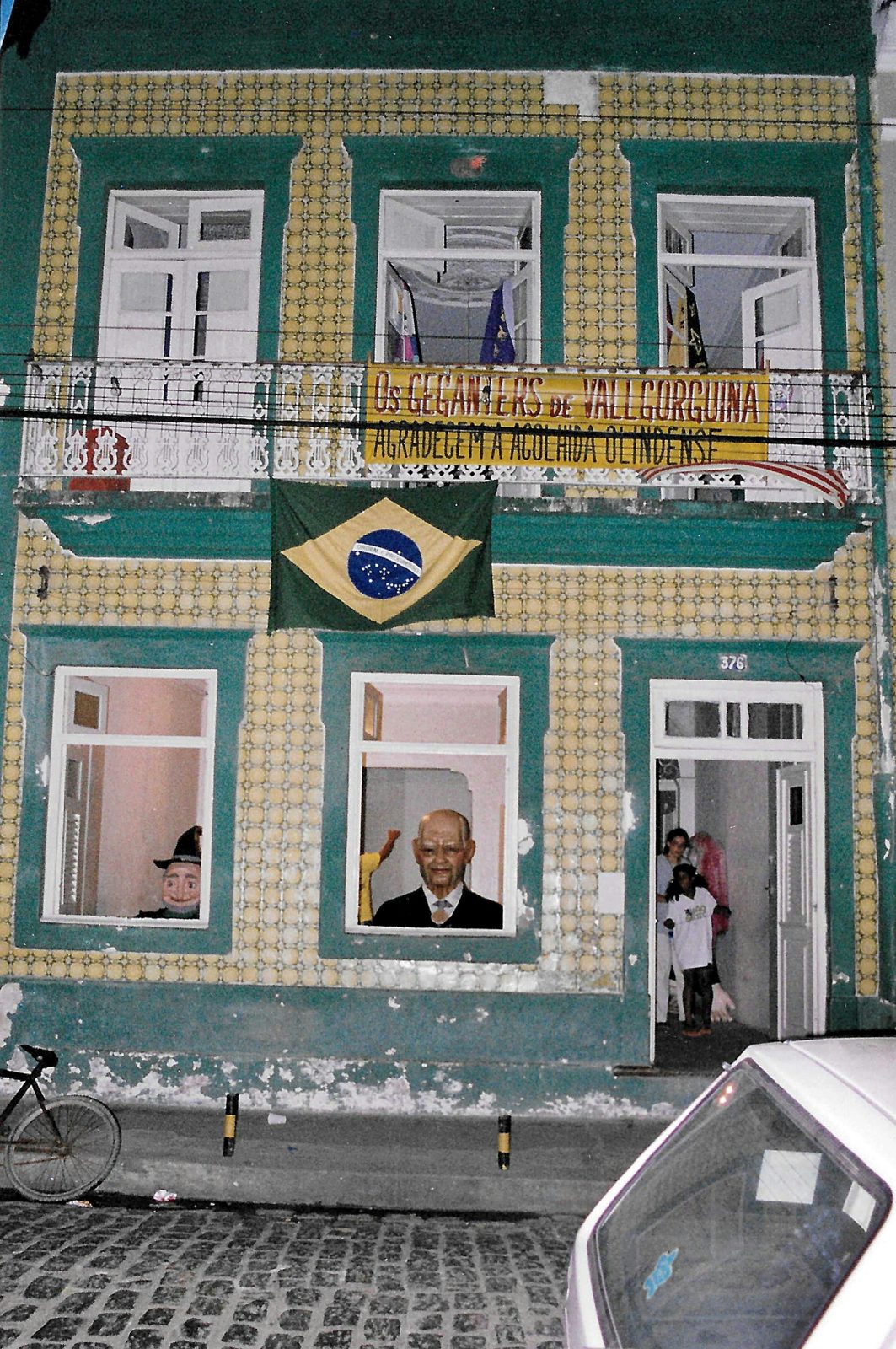
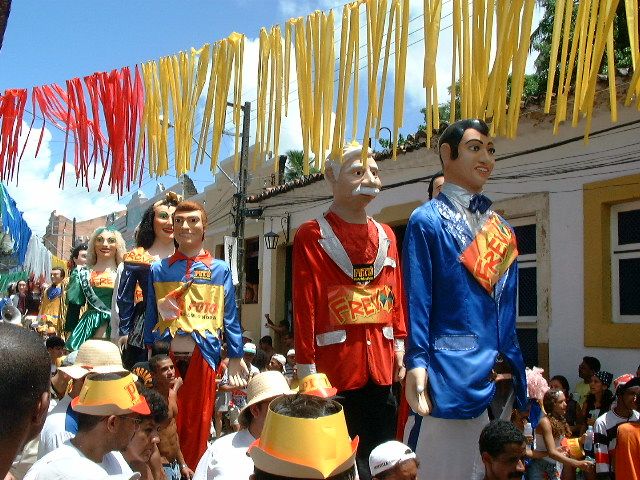
Even now, when we close our eyes, there is a corner of our brain called «memories of Olinda»: no need to password-protect it, because it is indelible, minute by minute. Even so, some things cannot be conveyed: the feelings of personal contact, the friendships we made there… the sheer wow of it all.
3Contents
4Where is Olinda?
🔍 Tap a photo to see it larger.
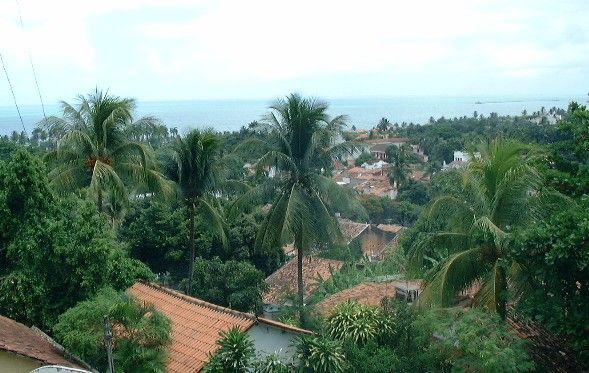
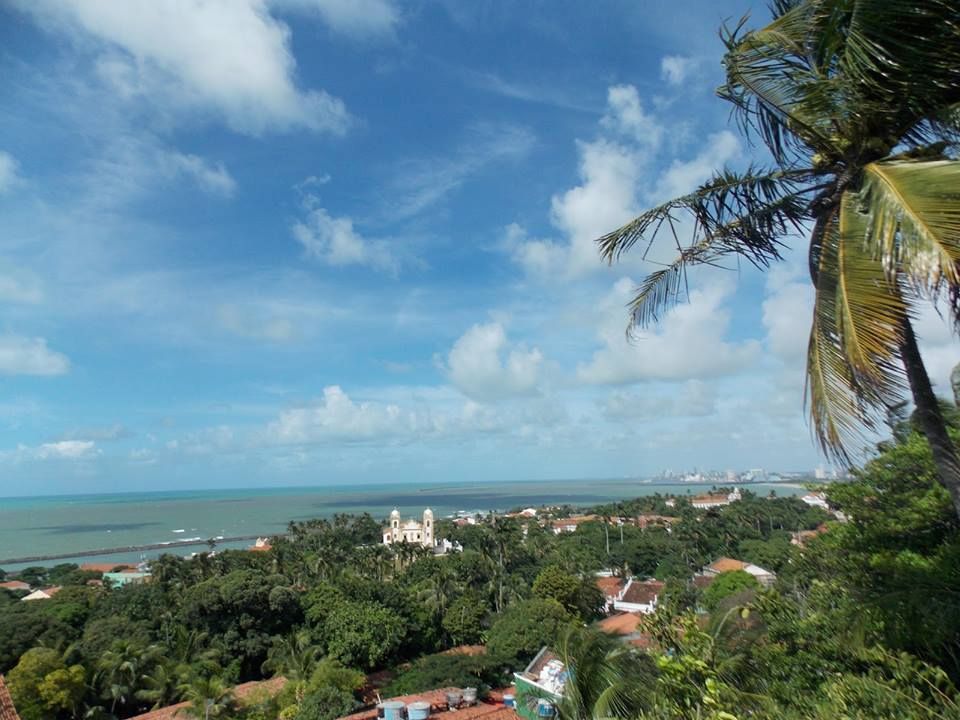
Olinda is in the state of Pernambuco, in north-east Brazil, only 7 km from Recife, the state capital. Its historic centre has been a UNESCO World Heritage Site since 1982: cobbled streets that climb and drop (the ladeiras), baroque churches, coloured houses and hills that look out over the Atlantic.
How we got there
- The group, by plane with TAP: Barcelona – Lisbon – Recife. About 6,700 km and, today, around 13 hours of travel including the stopover.
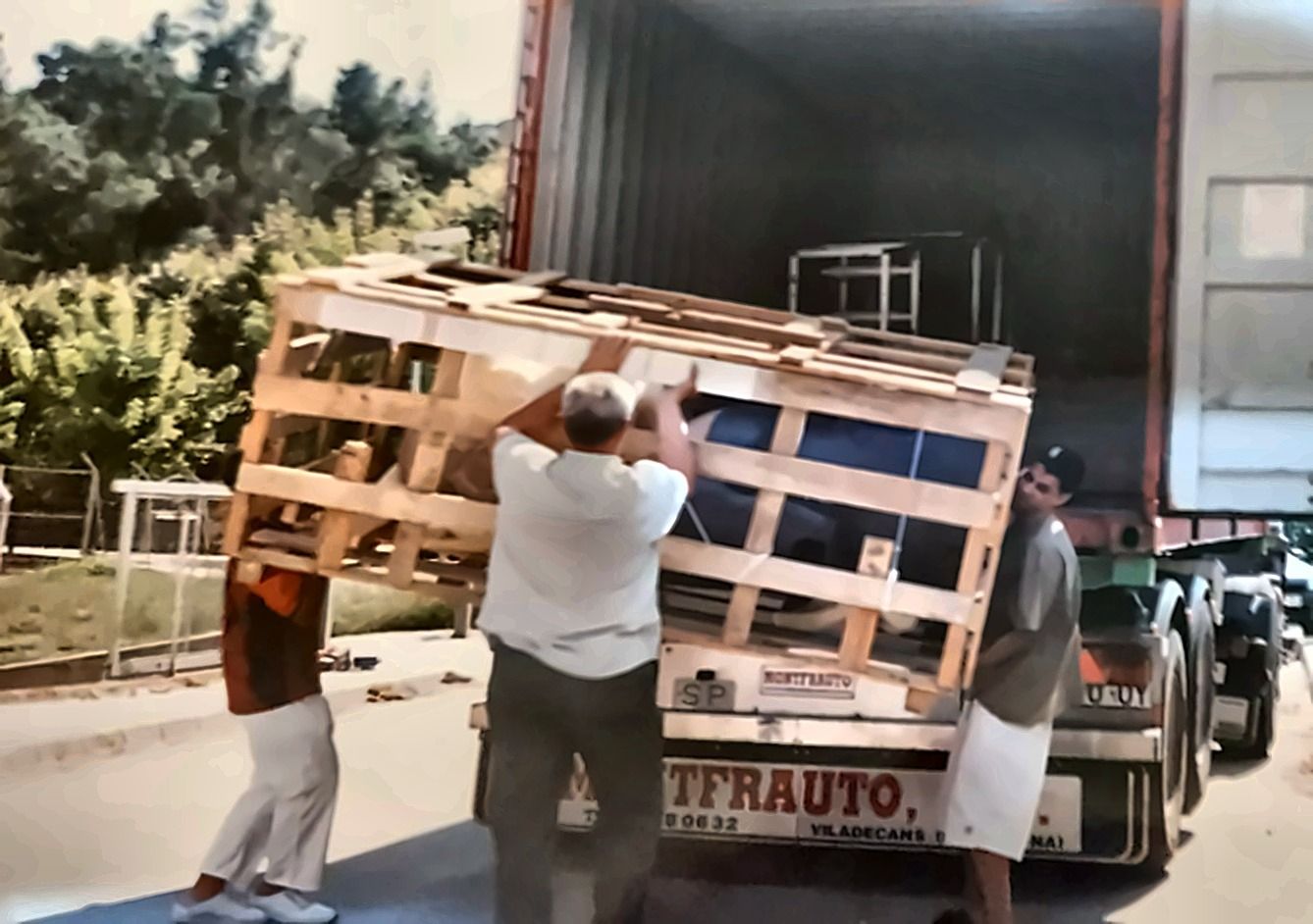
- The giants, in a 5-metre container for our exclusive use: we loaded and sealed it in Vallgorguina, it went by truck to the port of Barcelona, by ship to Salvador de Bahia (about 45 days) and from there by truck to Olinda (about 800 km).
From Recife airport (Guararapes – Gilberto Freyre) to Olinda it is about 18 km: 25 to 35 minutes by taxi or ride-hailing. With luggage, better not to take the bus.
5Itinerary and stops
🔍 Tap a photo to see it larger.
Many things stayed on our retina like slides. This is the thread of the days, as we remember them.
Day 1 · Early February · Arrival
It was already dark when we reached Recife and we saw little: a bit of leg-stretching, a friendly dinner with our Olinda hosts and off to rest after the long journey, as the jet lag was starting to show.
Day 2 · The giants go out into the street
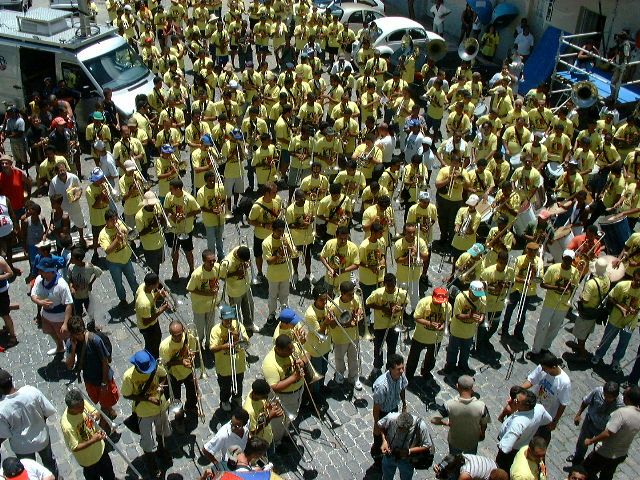
We went to collect the giants, who were already waiting for us assembled in the exhibition hall, where they had also laid out the material we had sent in the container: paintings and other objects, for the exhibition «Del mundo de los gigantes». From there, the three giants (the Avi Montassell and the two giants of Gualba, which we had on loan) paraded to the Prefeitura, accompanied by more than a hundred musicians from the frevo bands that were already enlivening the streets ahead of the wild days to come.
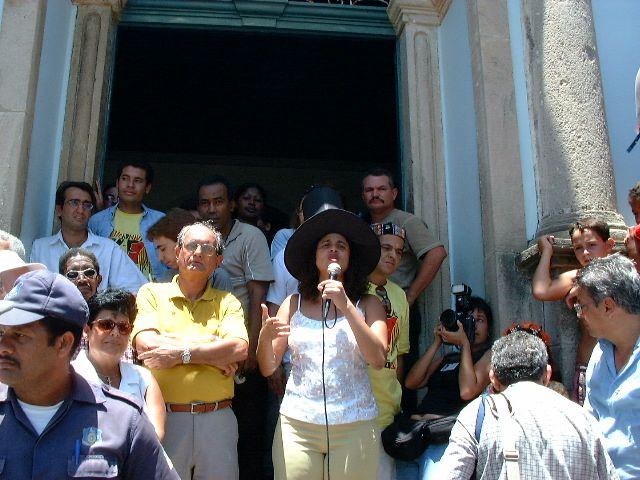
At the Prefeitura we were received by the mayor, Luciana Santos, who years later would become a minister in Lula da Silva's government. And she got carried away: she wanted to carry the bruixot, she who had never carried any giant, not even one from Olinda. We have the proof in the photos!
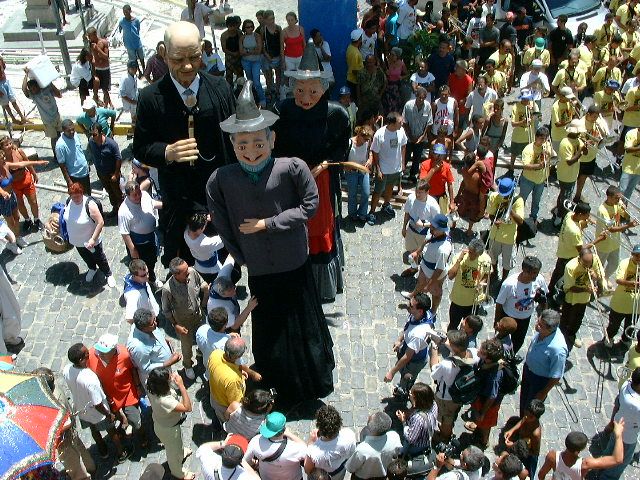
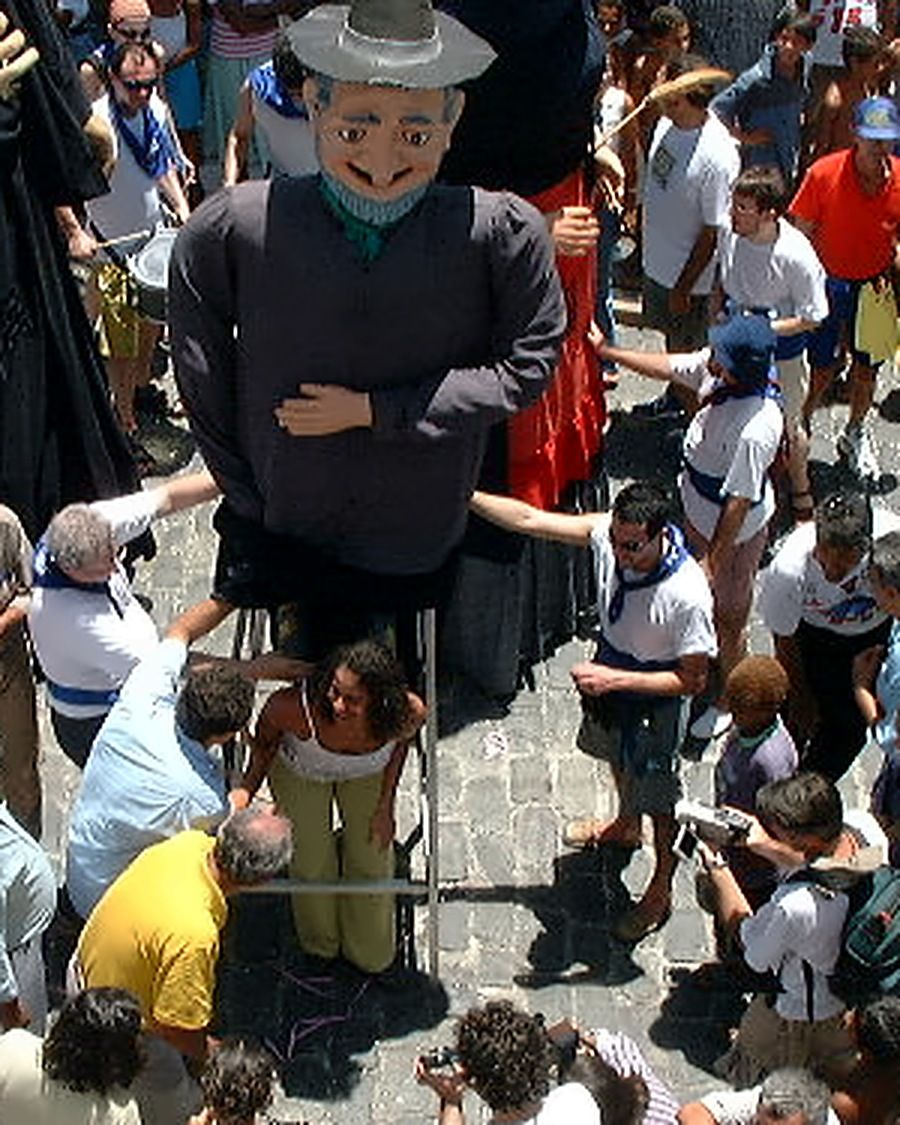
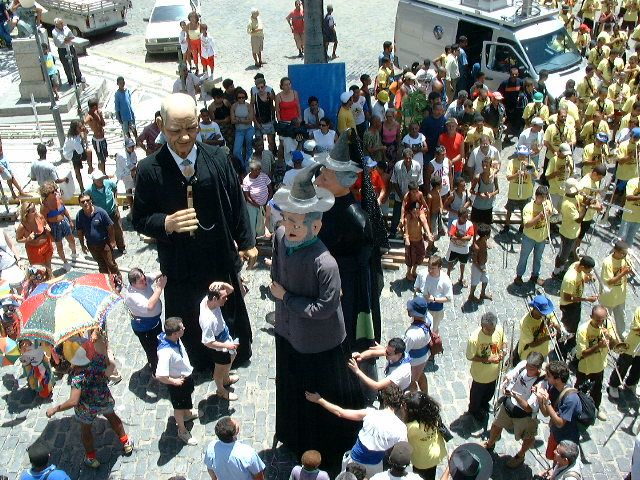
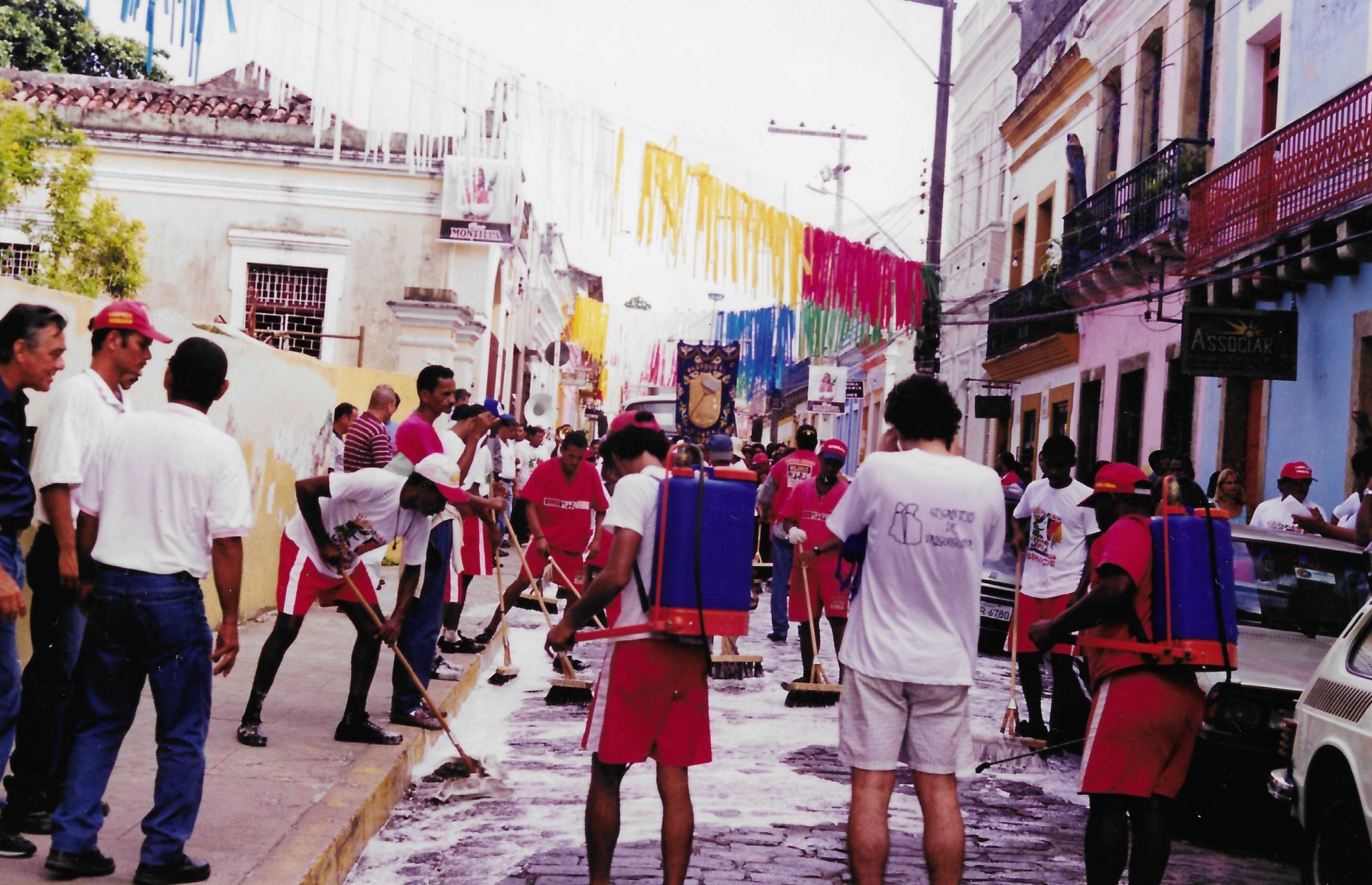
The same day we watched the traditional cleaning of the streets, before the revelry began.
Another day · Itamaracá Island · «The trap»
Early in the morning we left for Itamaracá Island, about 50 km to the north, to visit Forte Orange, the fort the Dutch built in 1631 right by the sea (what you see today is the Portuguese reconstruction), and to enjoy a good lunch of freshly caught fish. The streets of Olinda were calm, like those of a medium-sized town; we might almost say there were «few people». On the way back, however, the trap was waiting for us (see the Anecdotes).
Carnival Saturday · Recife: the Galo da Madrugada
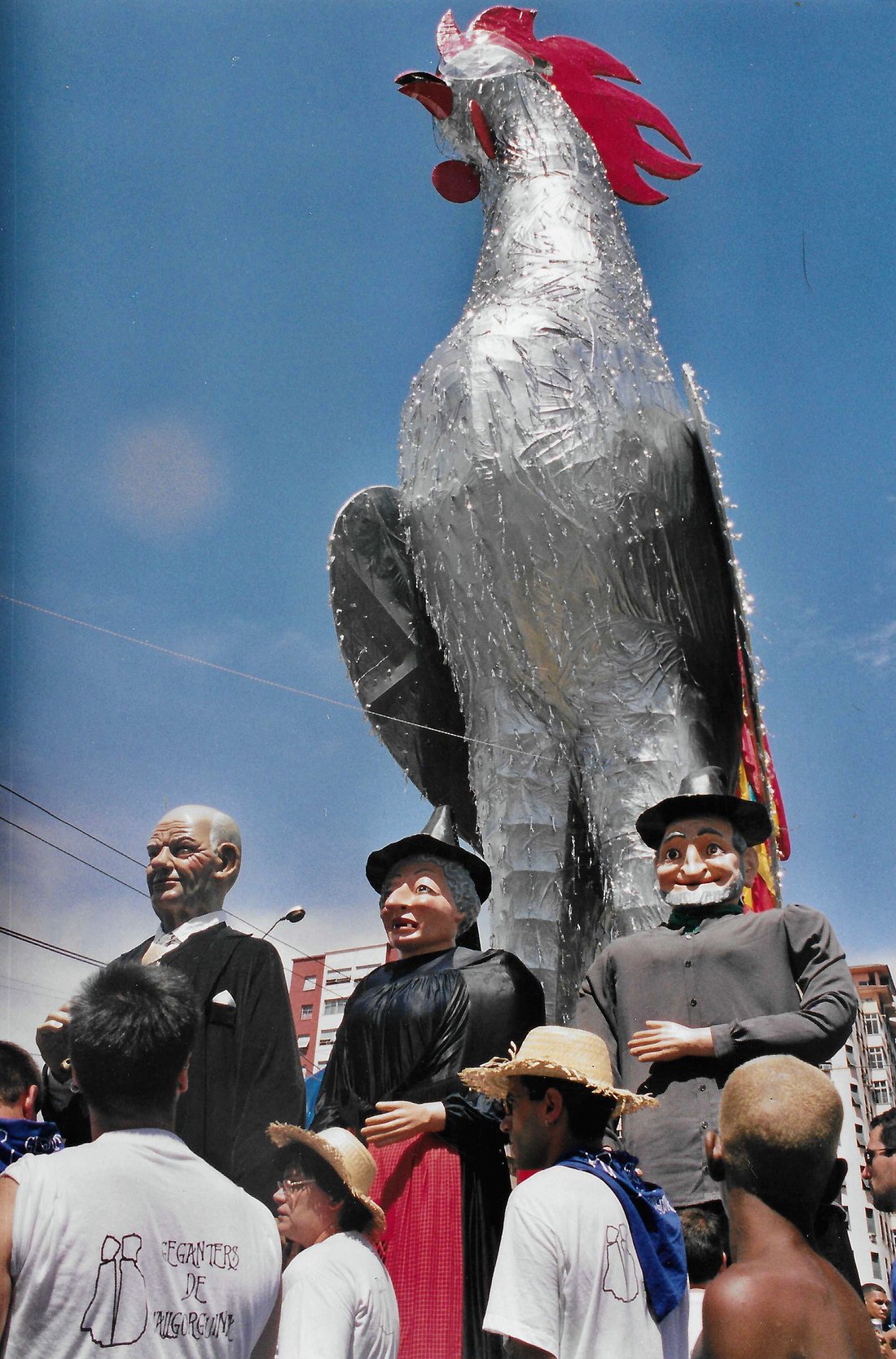
Parade with the giants at the Galo da Madrugada, in Recife, between stands full of people and passing beside the giant rooster standing on the Duarte Coelho bridge. When we passed, the crowd went wild and, with one roar, rose to its feet. What applause!
The carnival days · Olinda
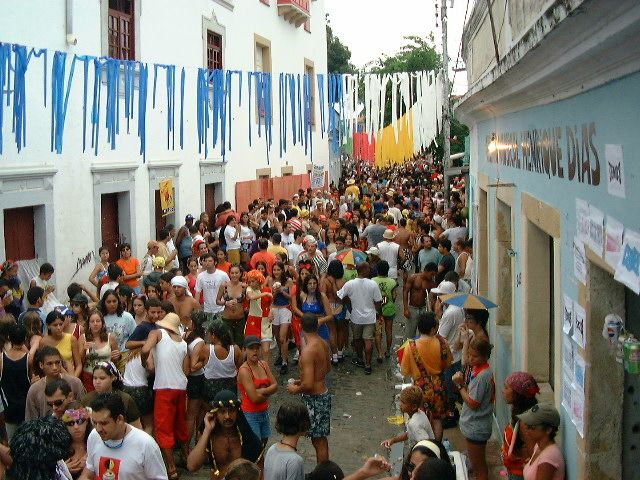
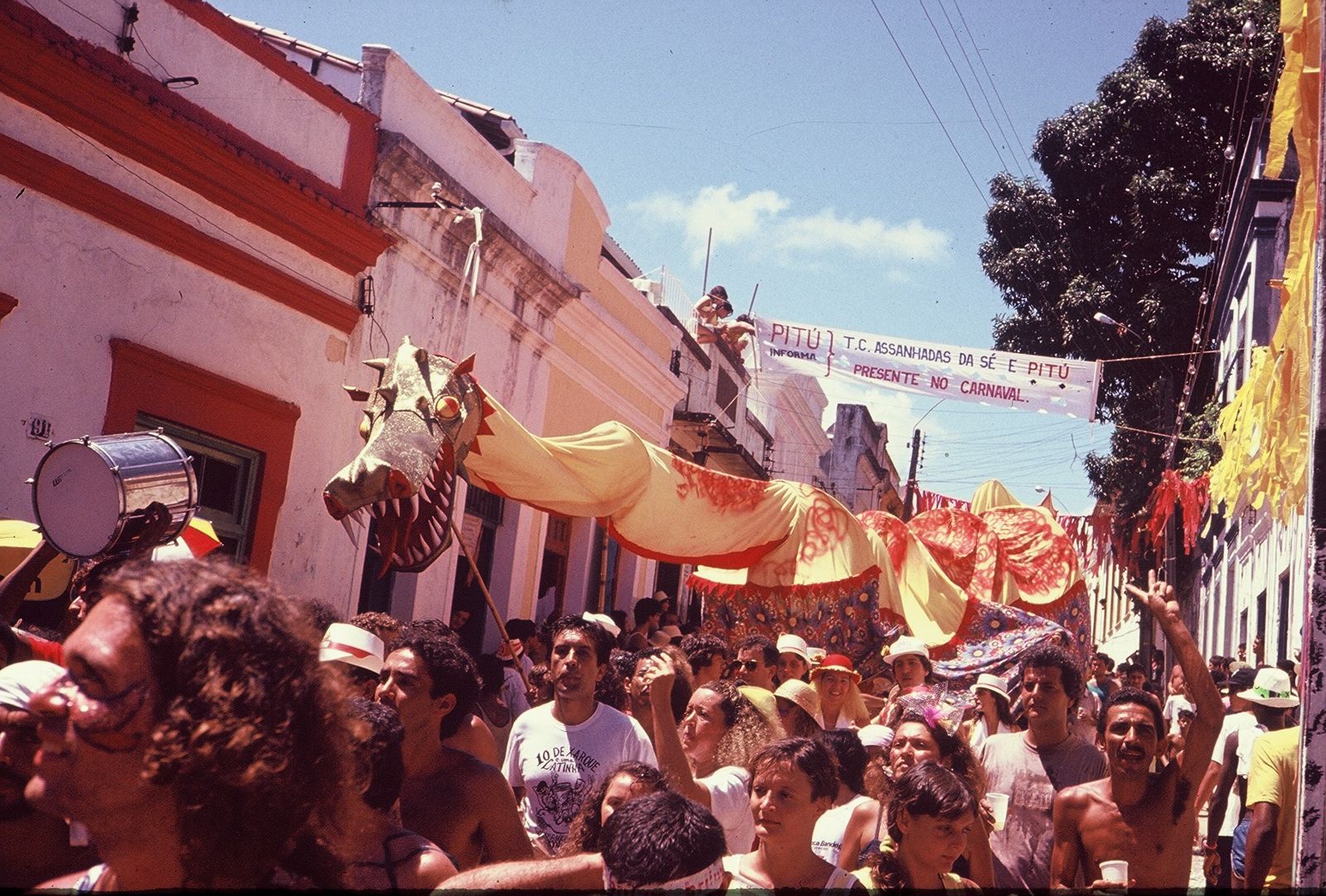
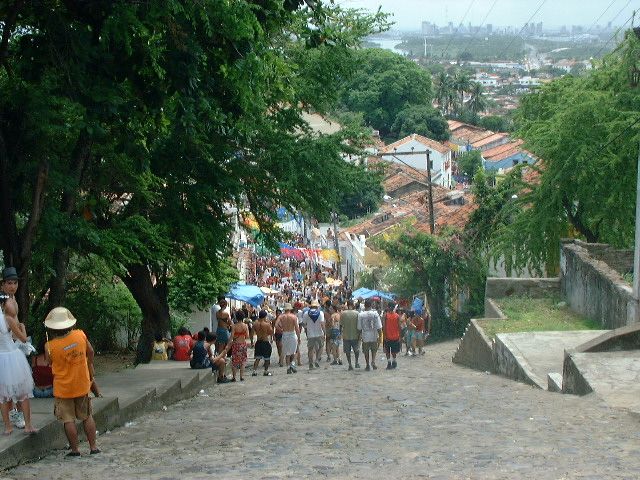
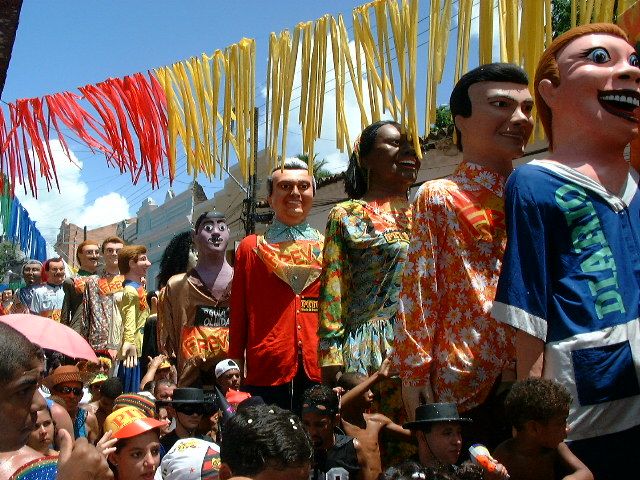
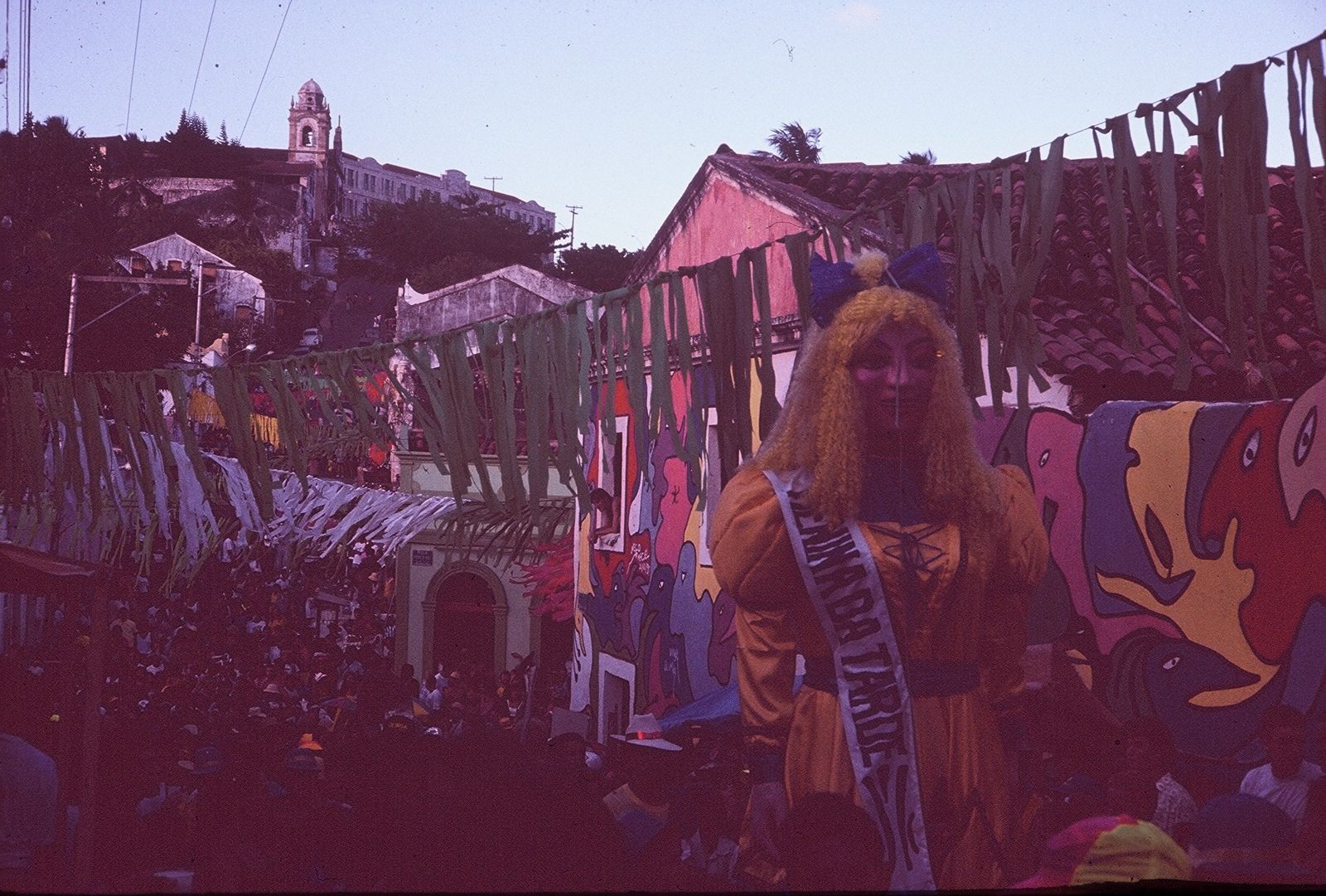
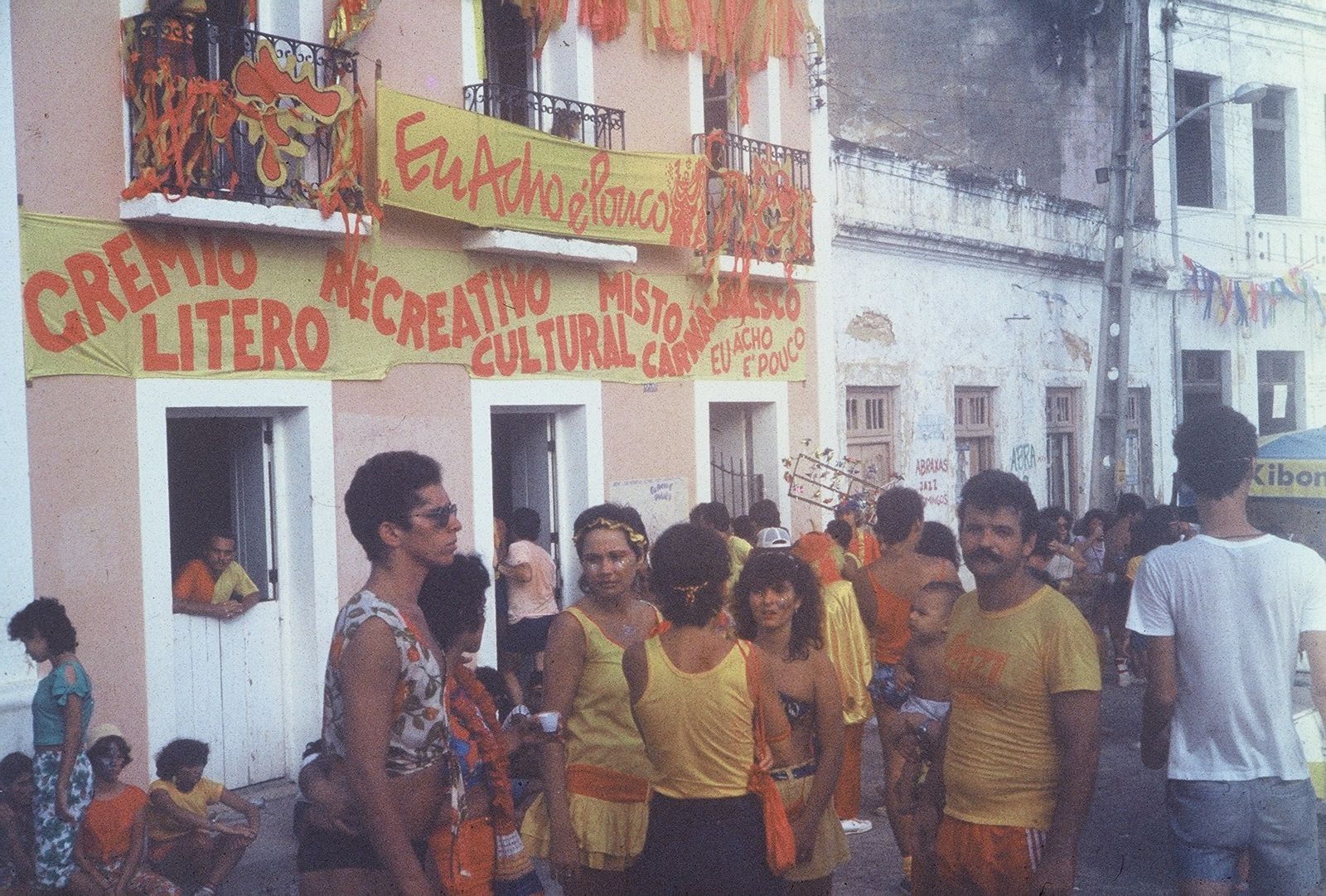
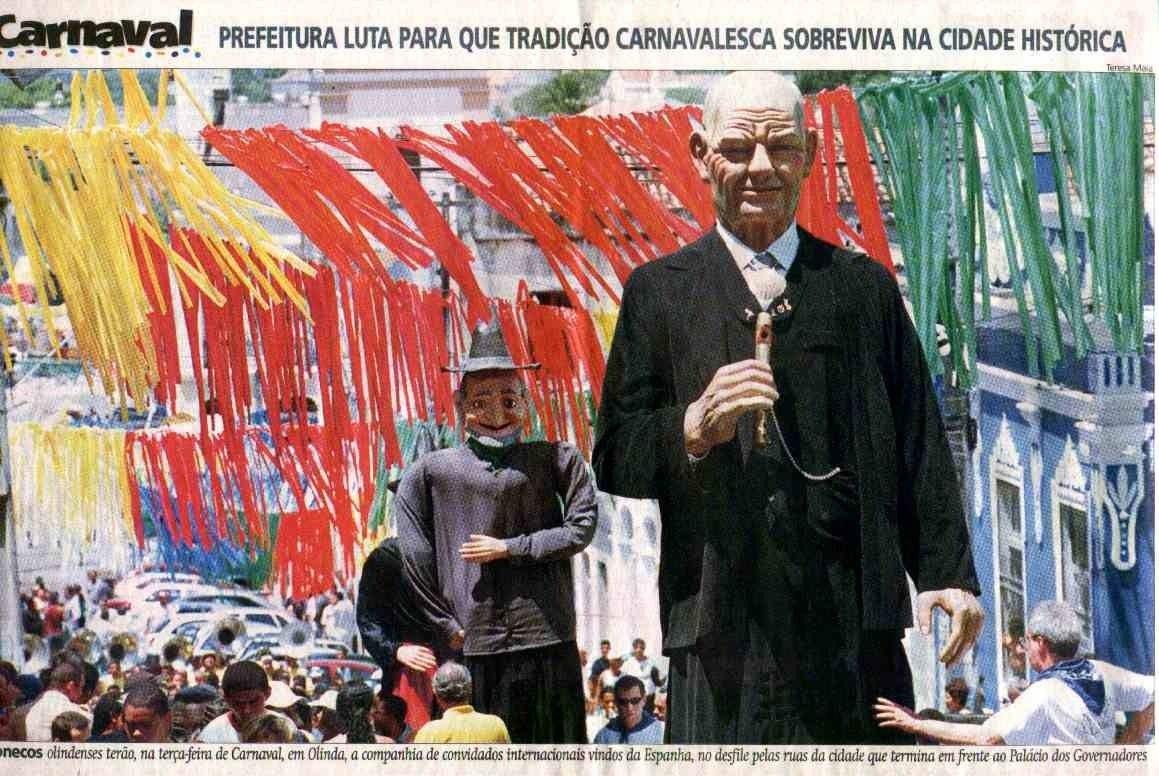
The party in the street, among blocos, frevo orchestras and giant bonecos. That is why we were there: the Encontro dos Bonecos Gigantes, with about two hundred bonecos through the streets of the Sítio Histórico. Constant revelry. And on carnival Tuesday, the great parade: the Olinda bonecos with their «international guests from Spain», through the streets of the town to the front of the Palácio dos Governadores. The press reported it!
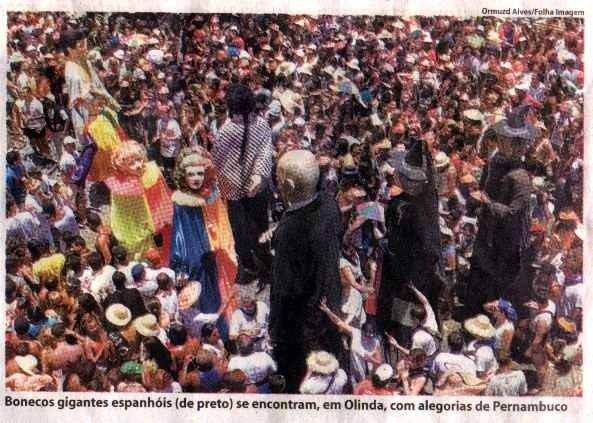
About ten days after arriving, back to Recife airport and home.
Stops
- Prefeitura de Olinda · R. de São Bento, 123, Varadouro — where the mayor received us. 📍 -8.018339, -34.852332
- Alto da Sé — Olinda's viewpoint: the whole town at your feet and Recife in the distance. Crafts, travelling painters and tapioca stalls. 📍 -8.013978, -34.849701
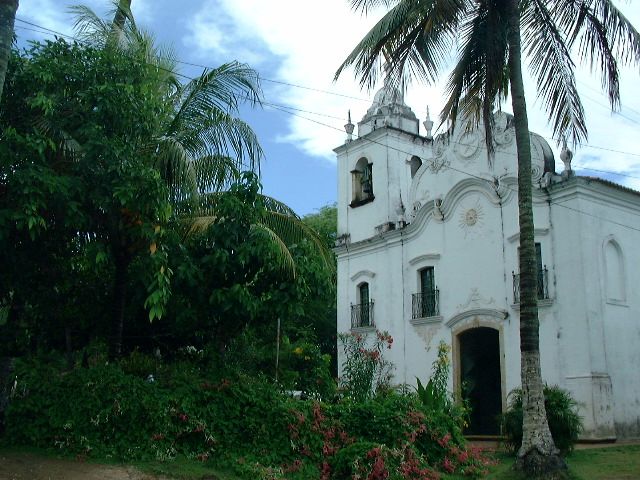
- Igreja de Nossa Senhora do Amparo — from 1613, rebuilt in 1644; Portuguese colonial baroque, white façade and two bell gables. 📍 -8.011817, -34.853552
- Casa dos Bonecos Gigantes · R. Bispo Coutinho, 780, Carmo — the bonecos museum. It did not yet exist in 2002: a visit we recommend today. 📍 -8.012996, -34.850876
- The house where we stayed — near the Pousada dos Quatro Cantos, on one of the main streets of the revelry.
- Duarte Coelho Bridge, Recife — where the giant rooster of the Galo da Madrugada is set up. 📍 -8.062402, -34.881044
- Forte Orange, Itamaracá Island — Dutch fort from 1631 facing the Atlantic. 📍 -7.810366, -34.839090
- Recife airport (Guararapes – Gilberto Freyre) 📍 -8.128739, -34.925853
Anecdotes
6Map and QR
Two maps for Google Maps: one with the stops in Olinda and another with the airport, Recife and Itamaracá. Tap the QR with your phone or open the link.
7Giants and bonecos
🔍 Tap a photo to see it larger.
The exchange was born from looking at pictures on the internet and swapping messages with Hilário. From there to the proposal it was only a step.
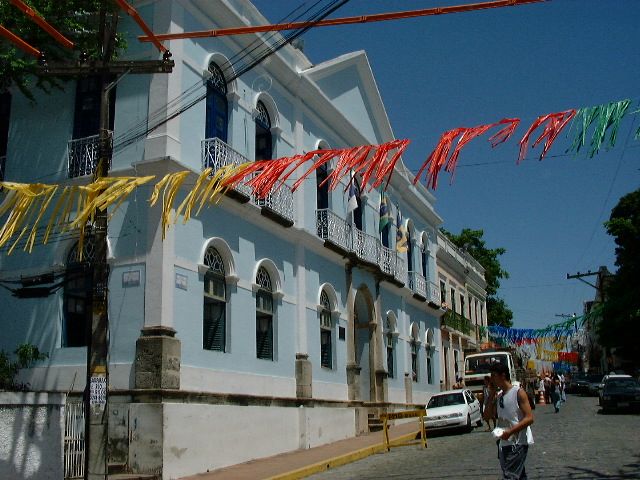
Preparing the packing to put the giants in the container was the work of the whole group, and a lot of it. Finding them again in Olinda, already assembled by our friends, was a pleasant surprise and a heartfelt joy.
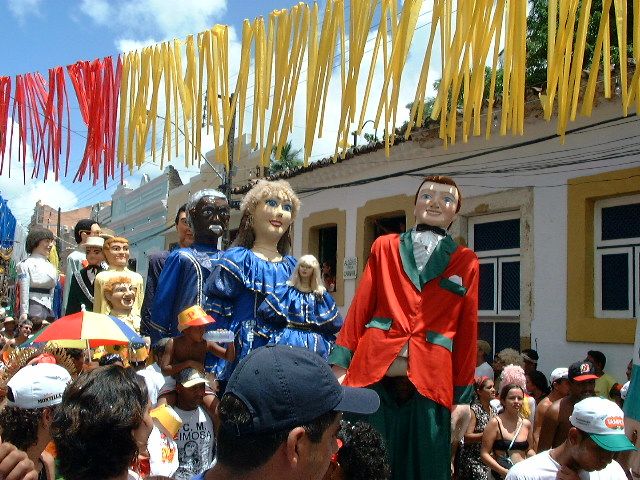
Then, in the streets, the mingling with the people and the bonecos was unforgettable! But we had to be careful: the bonecos do not have a stand and the crowd threw themselves at us. Crashing into the bearers' legs, they put the giants and those carrying them in danger.
Where each comes from
Without ruling out older precedents that were never documented, the European giants and the bonecos of Olinda have the same origin, religious processions, but have gone towards opposite festivals: here, solemnity and local identity; there, the satire and revelry of carnival.
- With the information we have today, the first documented giant on the peninsula appears in the Corpus procession in Barcelona in 1424.
- In 1780, Charles III banned giants from processions; they survived in popular festivals.
- In Brazil, in 1919, in Belém do São Francisco (the sertão of Pernambuco), Gumercindo Pires de Carvalho created the Zé Pereira, inspired by a Belgian priest who described what processions with giants were like in Europe. In 1929 the Vitalina was added.
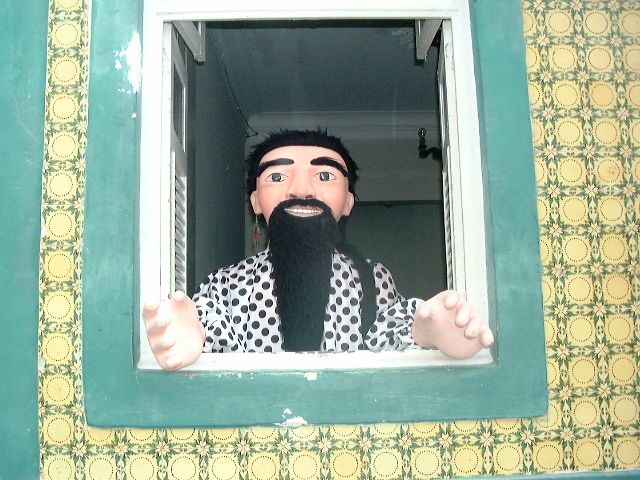
- In 1932 the Homem da Meia-Noite (the Midnight Man) was born in Olinda, the most famous boneco, which still opens the carnival.
8The Carnival of Olinda and Recife
🔍 Tap a photo to see it larger.
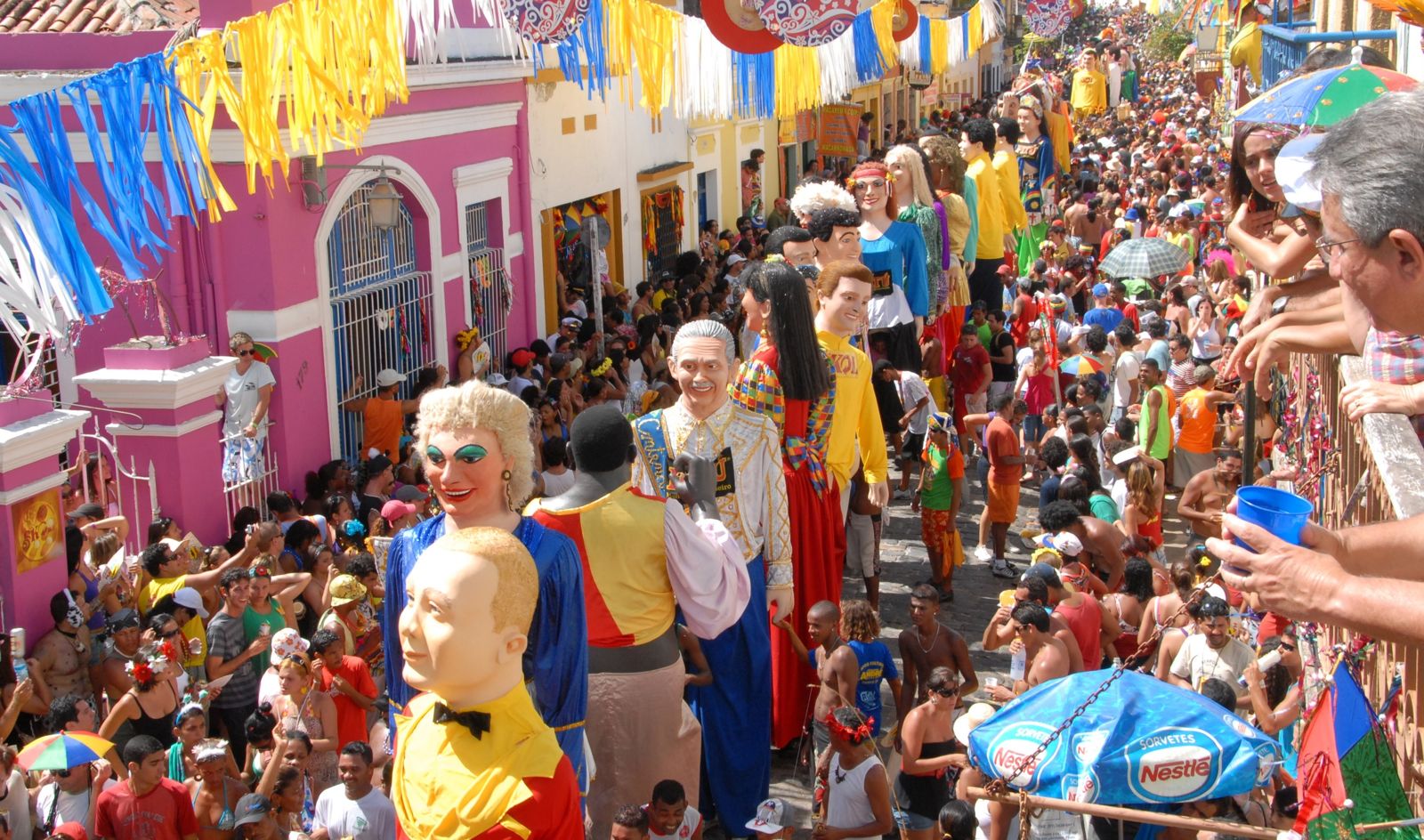
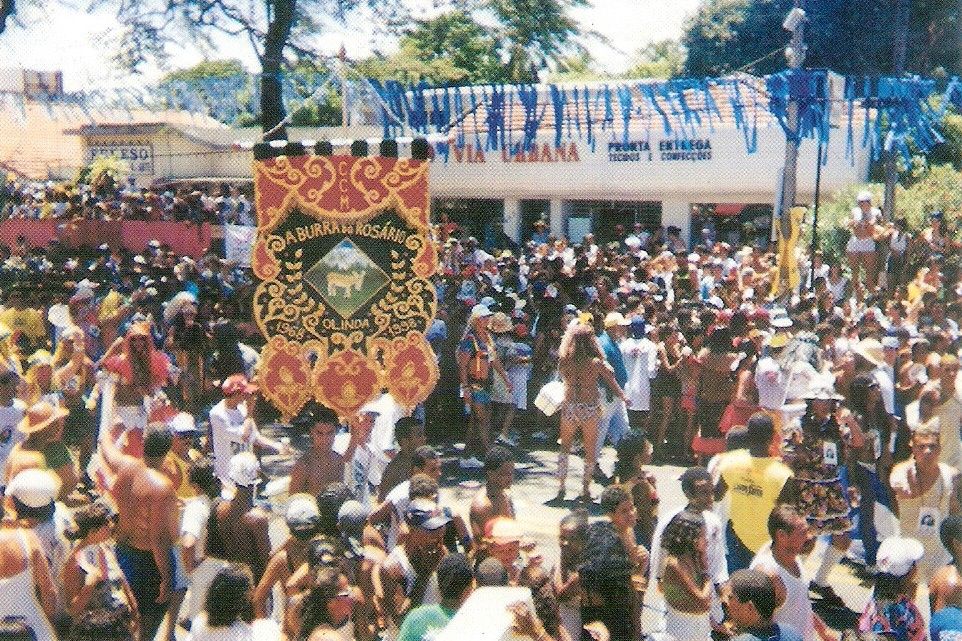
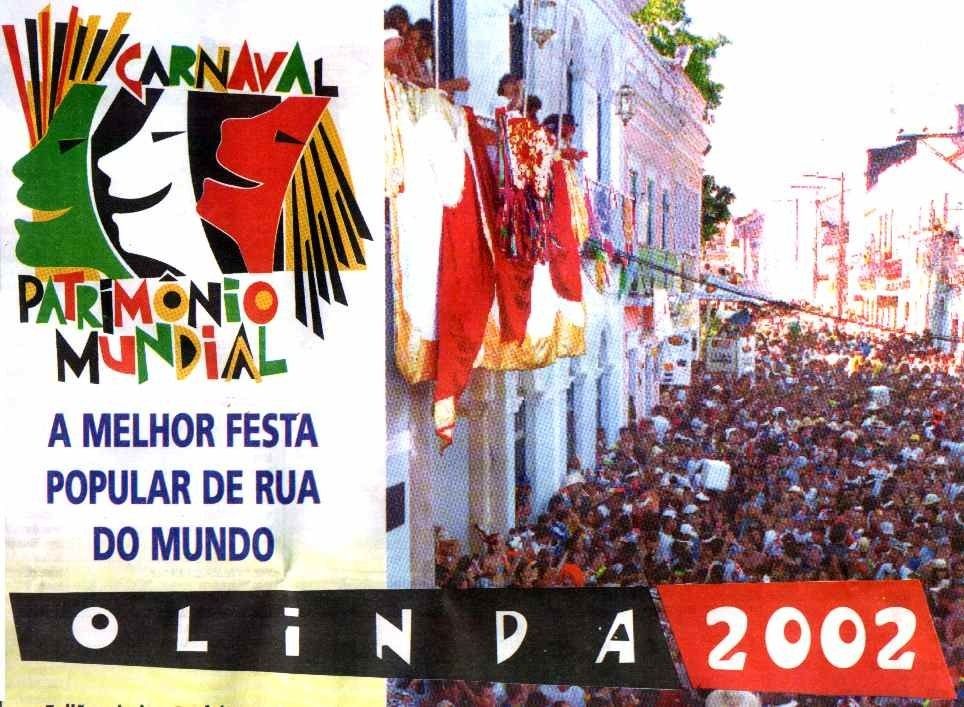
The Carnival of Olinda is the anti-Rio. It has no sambadrome and no expensive tickets: it is a street carnival, one hundred per cent popular, in a colonial city in north-east Brazil. It is considered one of the most popular and colourful festivals in the country.
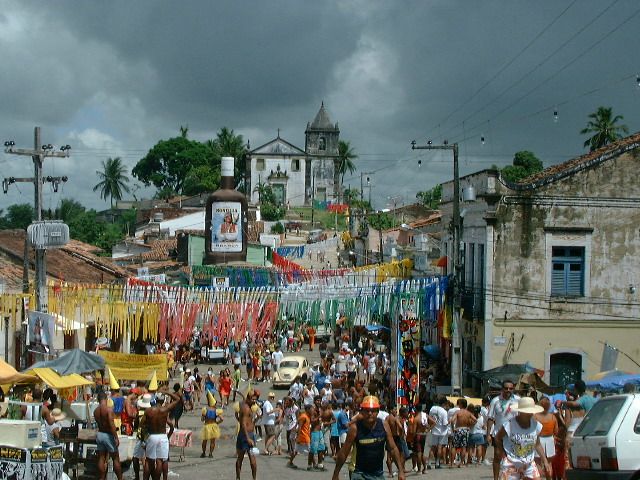
It is held in February or March, in the days before Lent. Officially it lasts five days, but in practice the city has been partying for weeks. In 2002 it began on Saturday 9 February, and in 2027 it will begin on Saturday 6 February.
What makes it so special? Unlike Rio or Salvador, here everything happens in the street and is free. There are no closed parades or exclusive areas: the party belongs to the people and is for the people, and anyone can join in.
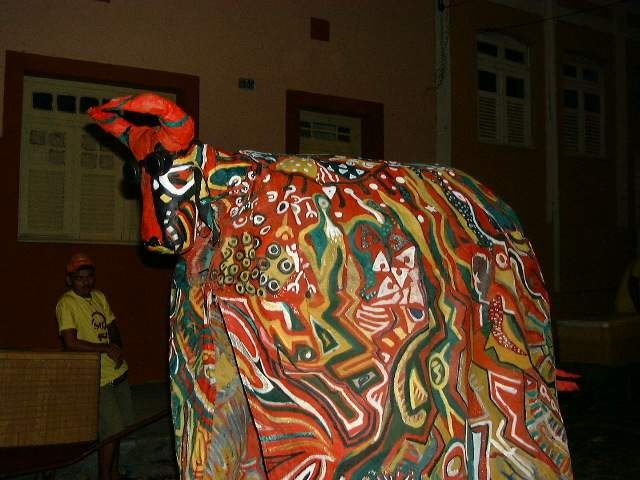
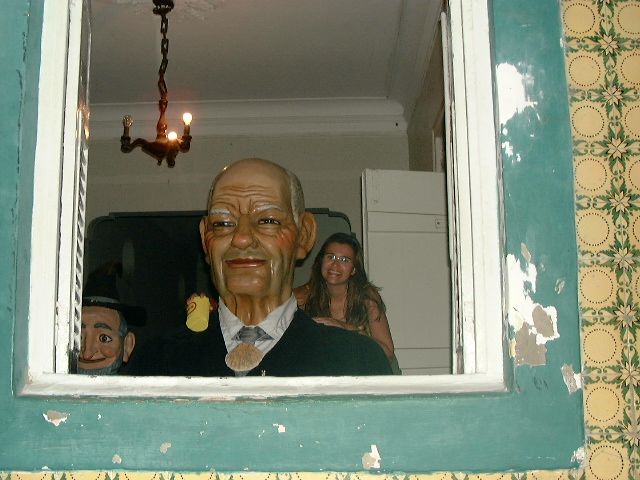
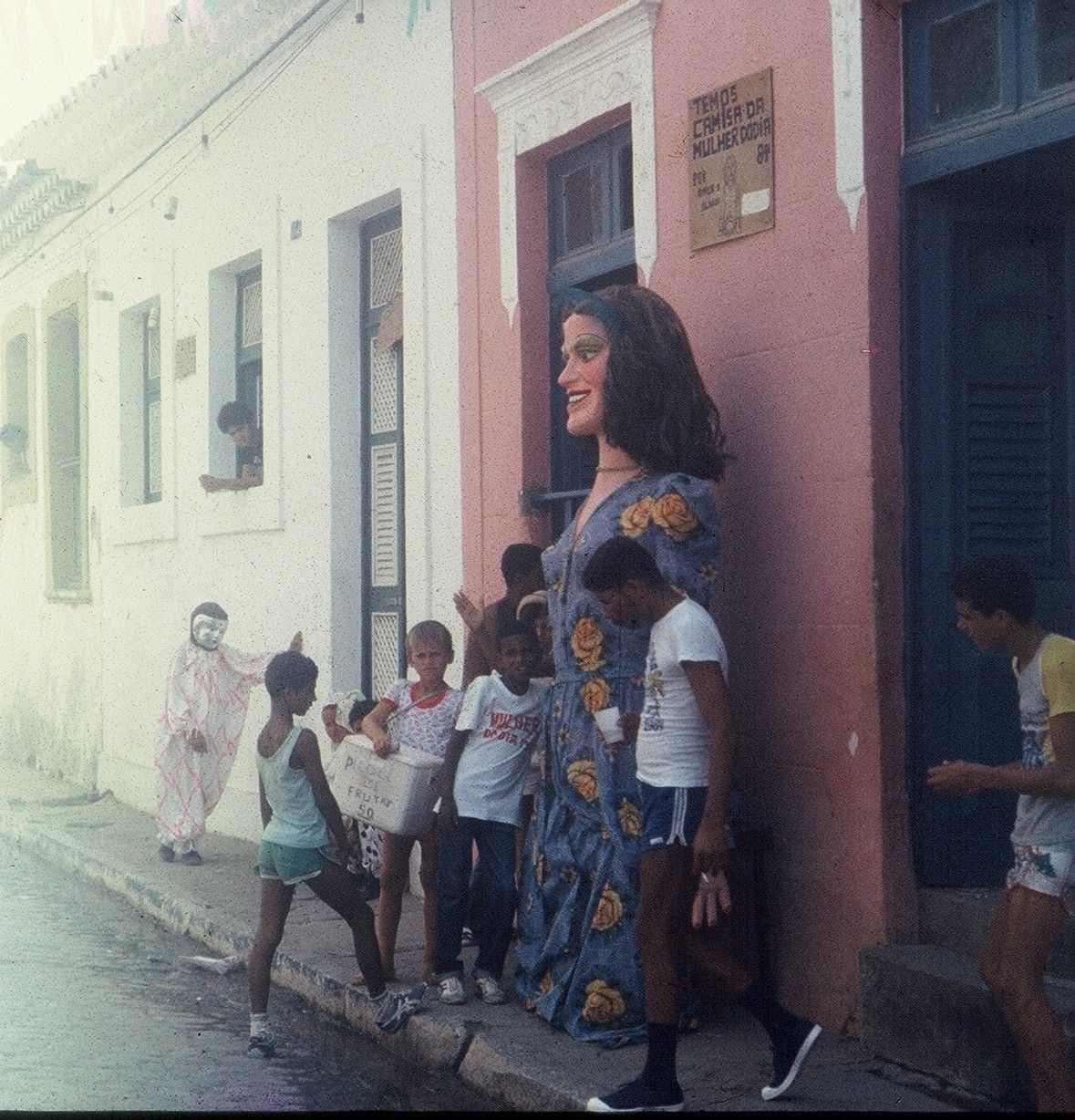
- The giant bonecos: papier-mâché figures (although lately many are fibreglass) 3 and 4 metres tall, carried on the shoulders, with the head and without the stand we carry ourselves. They are the symbol of Olinda. They represent politicians, artists and local characters, and parade among the crowd.
- The music is not samba, it is frevo, a very fast rhythm, with trumpets and trombones, danced by jumping with a small sombrinha. UNESCO declared it Intangible Cultural Heritage of Humanity in 2012. Maracatu and afoxé are also heard a lot.
- The blocos: neighbourhood orchestras and groups that come out with their own themes. You don't watch the parade: you are part of it. You dress up, dance behind the band and go up and down the ladeiras.
Since it is next to Recife, it forms the Recife–Olinda circuit. Recife has the Galo da Madrugada, which since 1994 has held the Guinness record for the largest carnival bloco in the world.
In figures (carnival 2026)
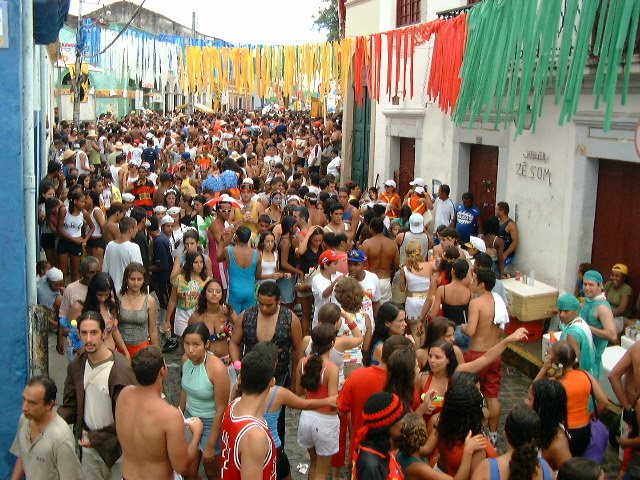
- Olinda: about 4 million people, more than 400 orchestras and 200 attractions in 9 official hubs (Prefeitura figures).
- Galo da Madrugada (Recife): about 2.5 million people in a single day.
- Security in Olinda: more than 7,000 officers and 154 cameras. We already noticed it in 2002: lots of police and soldiers on patrol.
In short: if the Rio carnival is a show to watch, Olinda's is a party to get lost in. You put on an improvised costume, join a bloco and end up dancing frevo among giants until you can't any more.
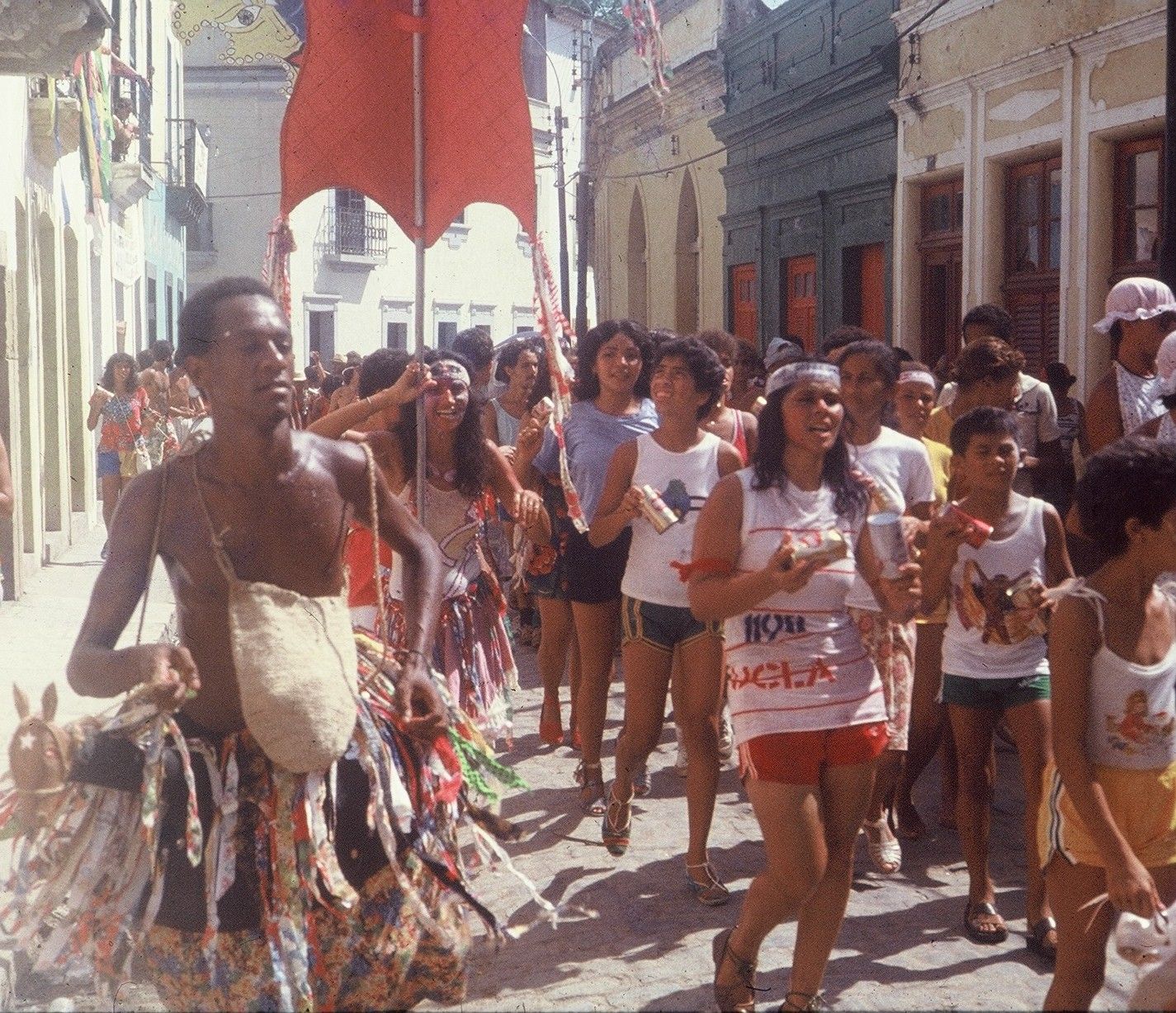
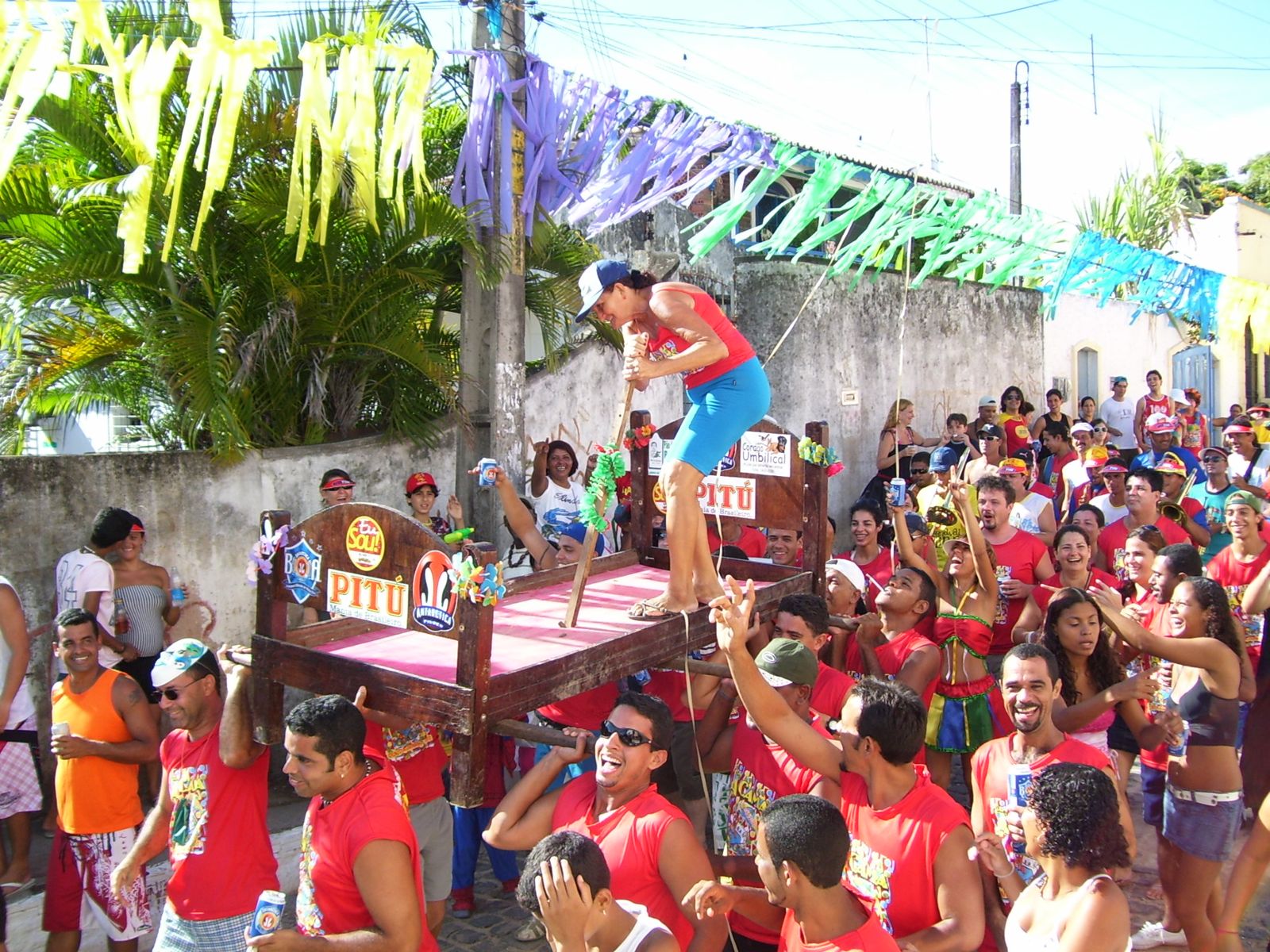
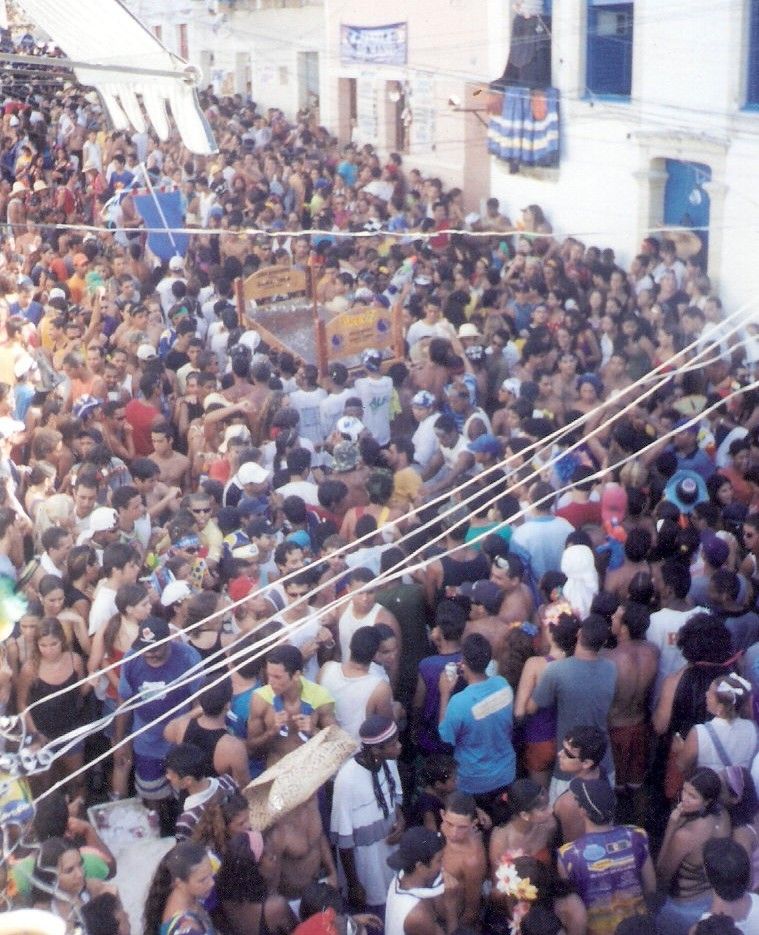
The crowd, in pictures
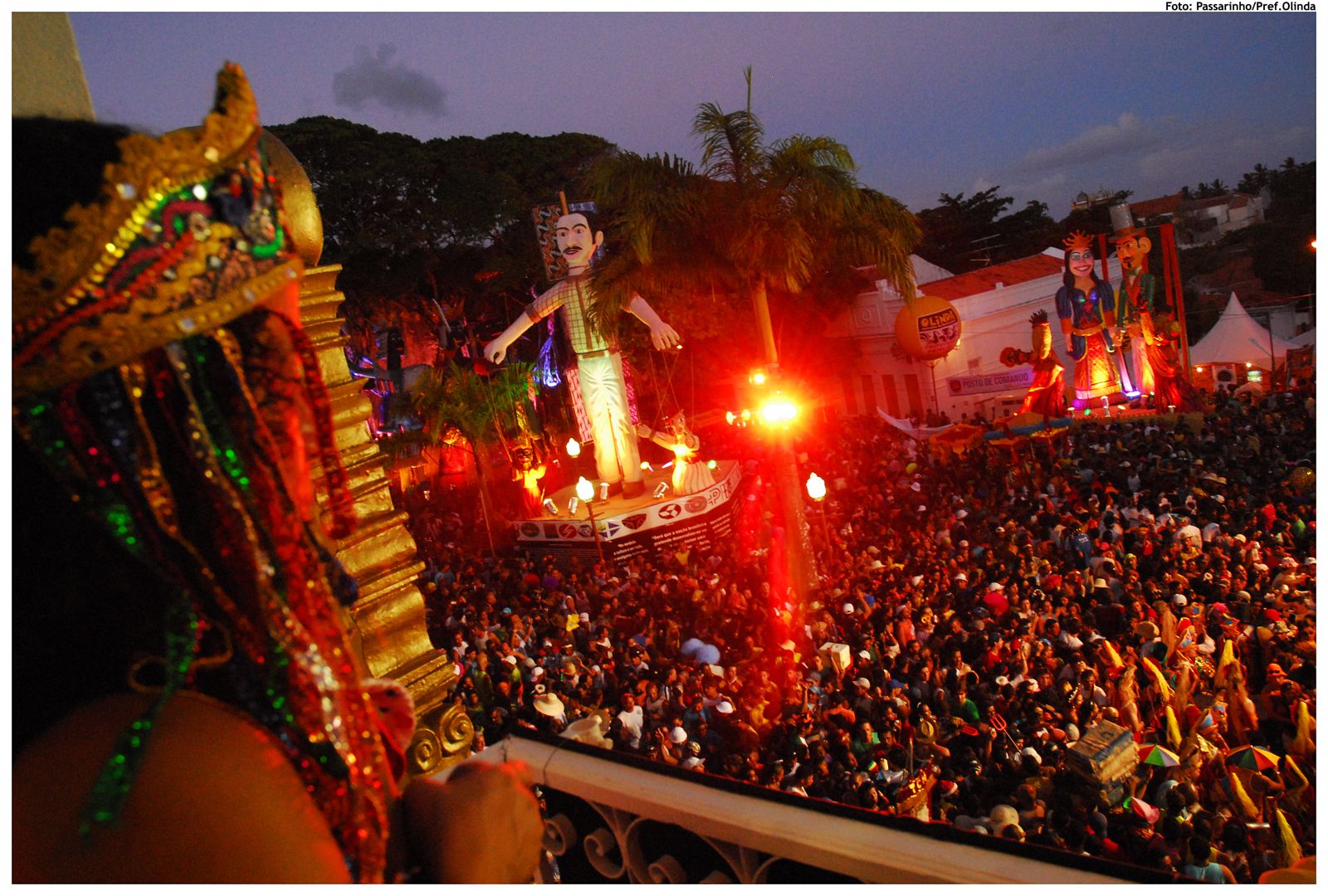
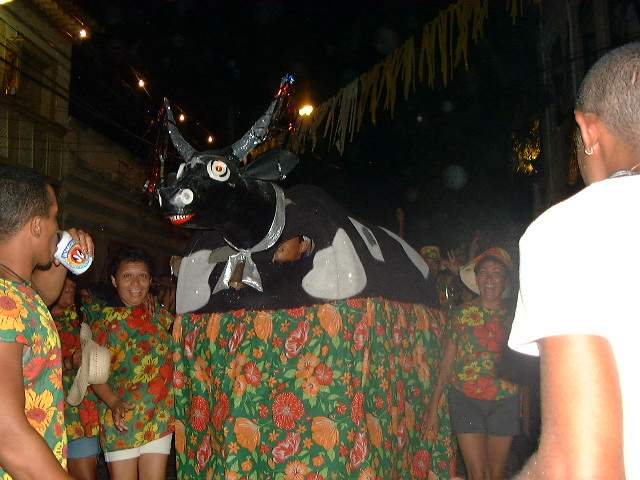
The figures are not fully understood until you see it. These three photos are not ours: they are from other Olinda carnivals, from Wikimedia Commons, with a free licence and the author's credit. But it is exactly what we lived.
Some of our souvenirs of Olinda
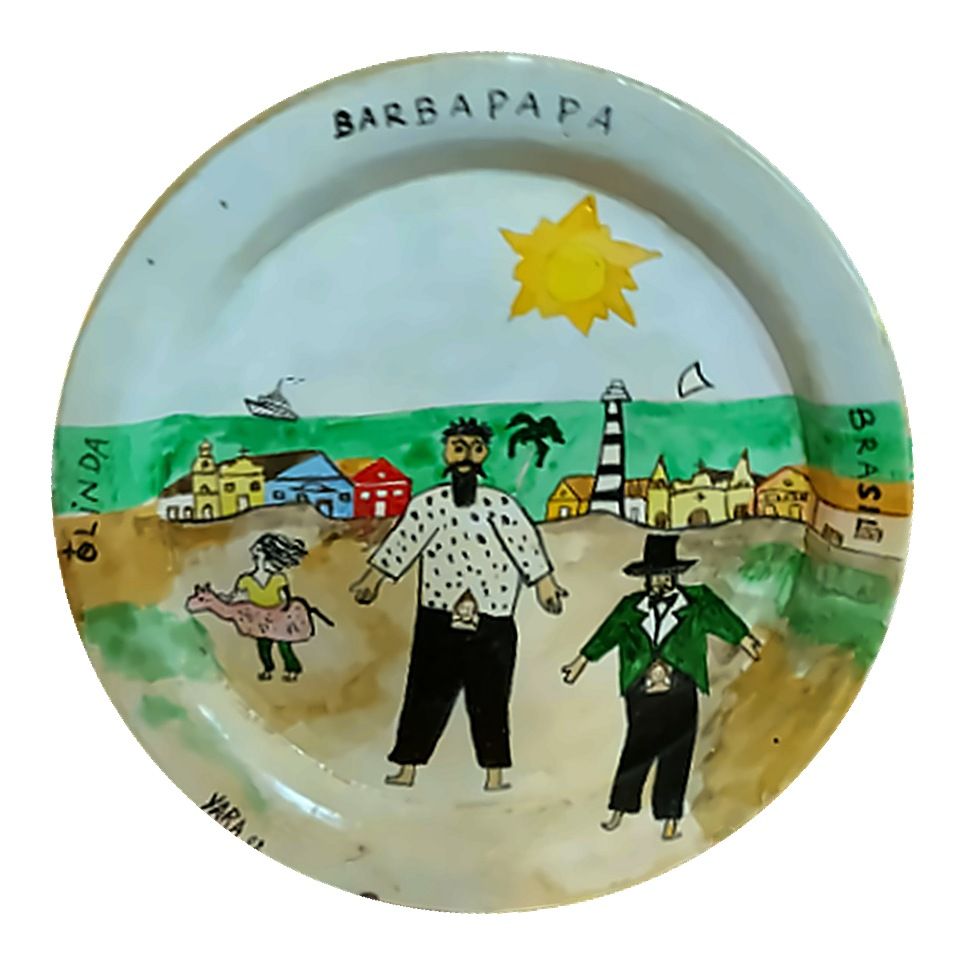
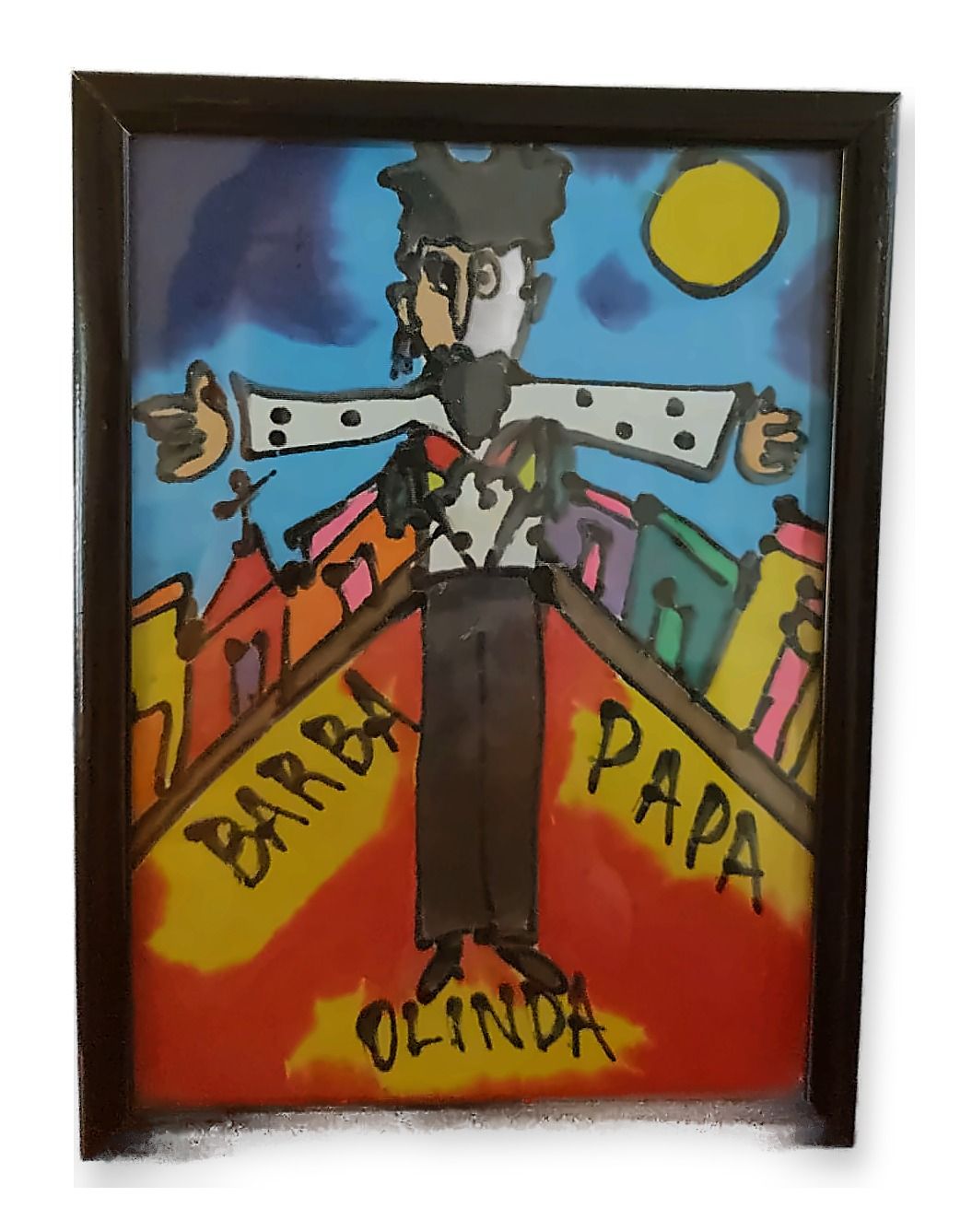
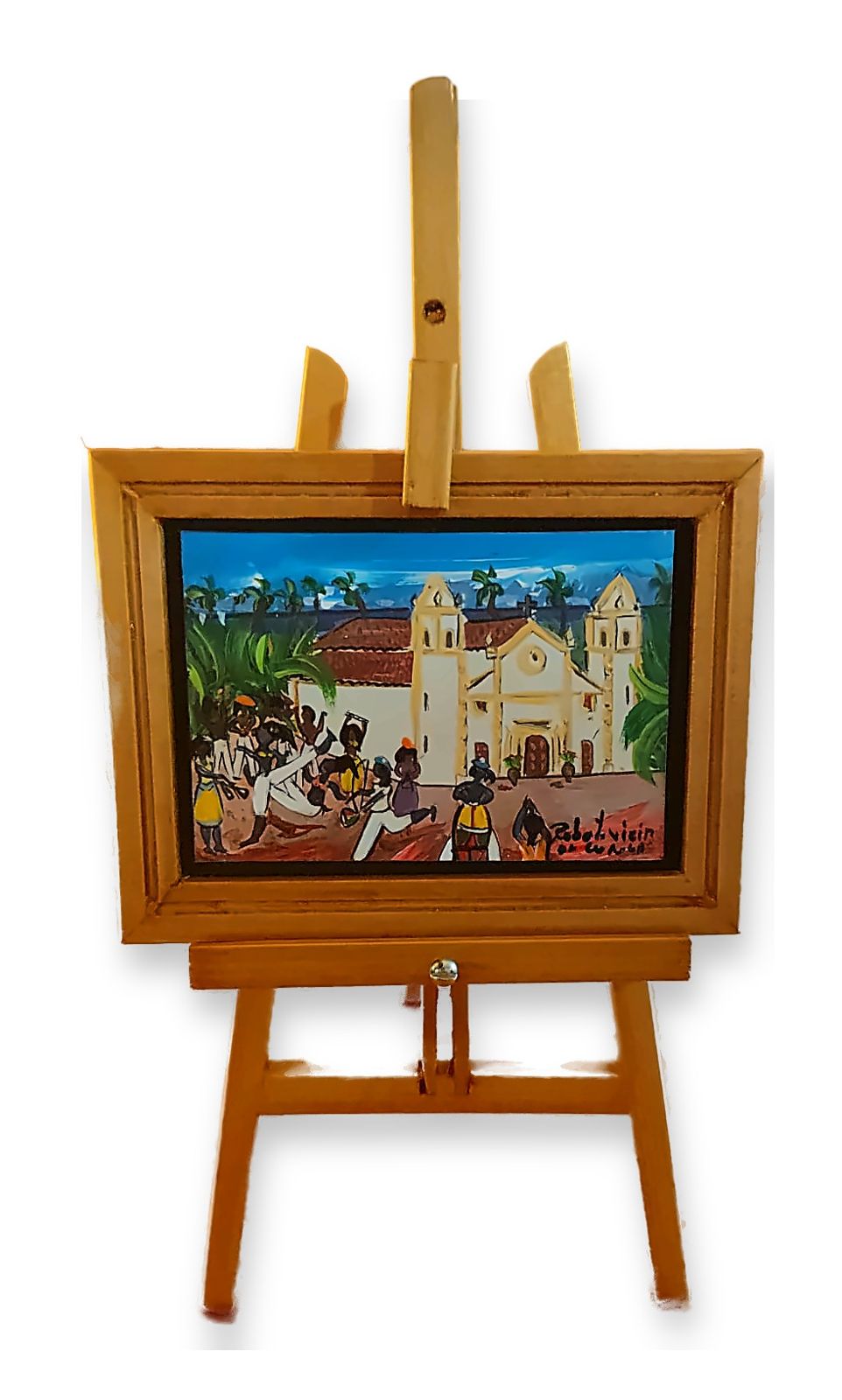
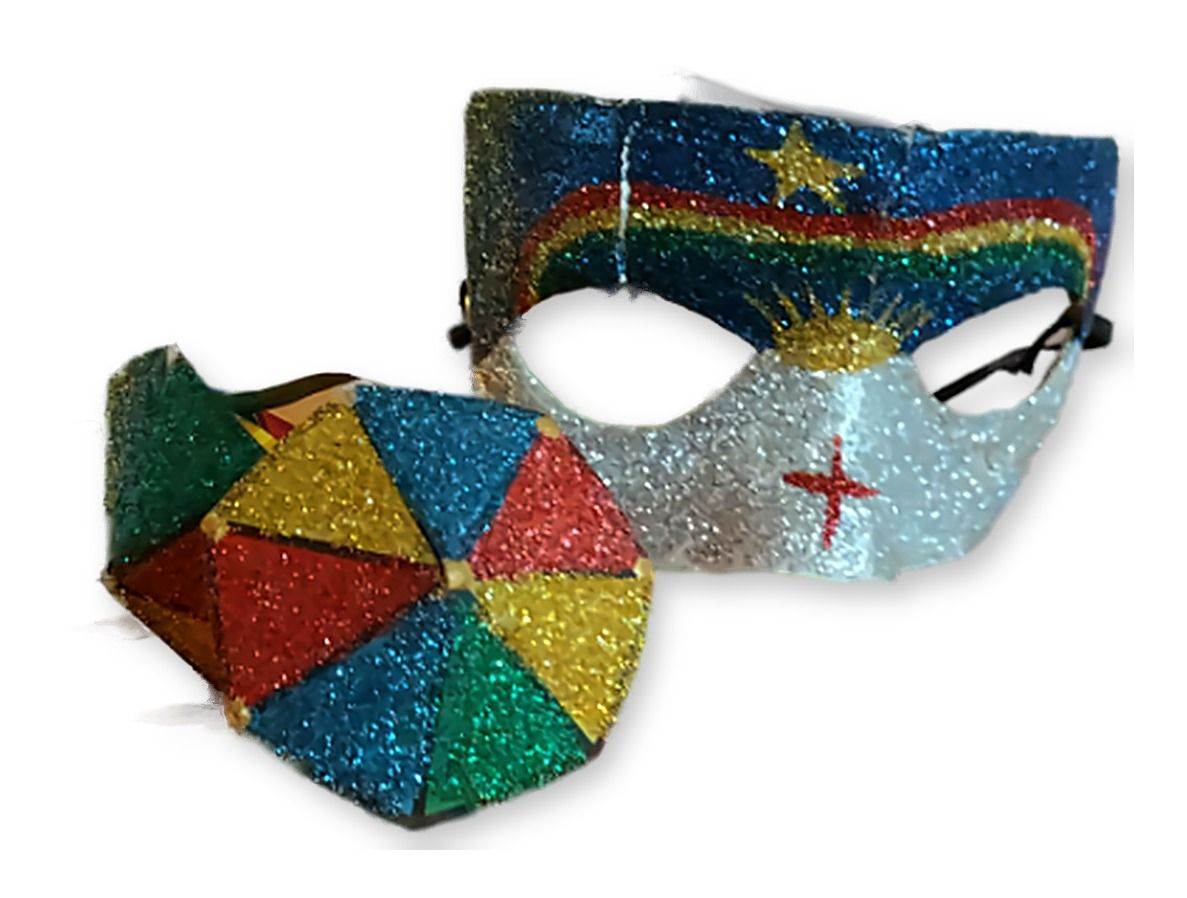
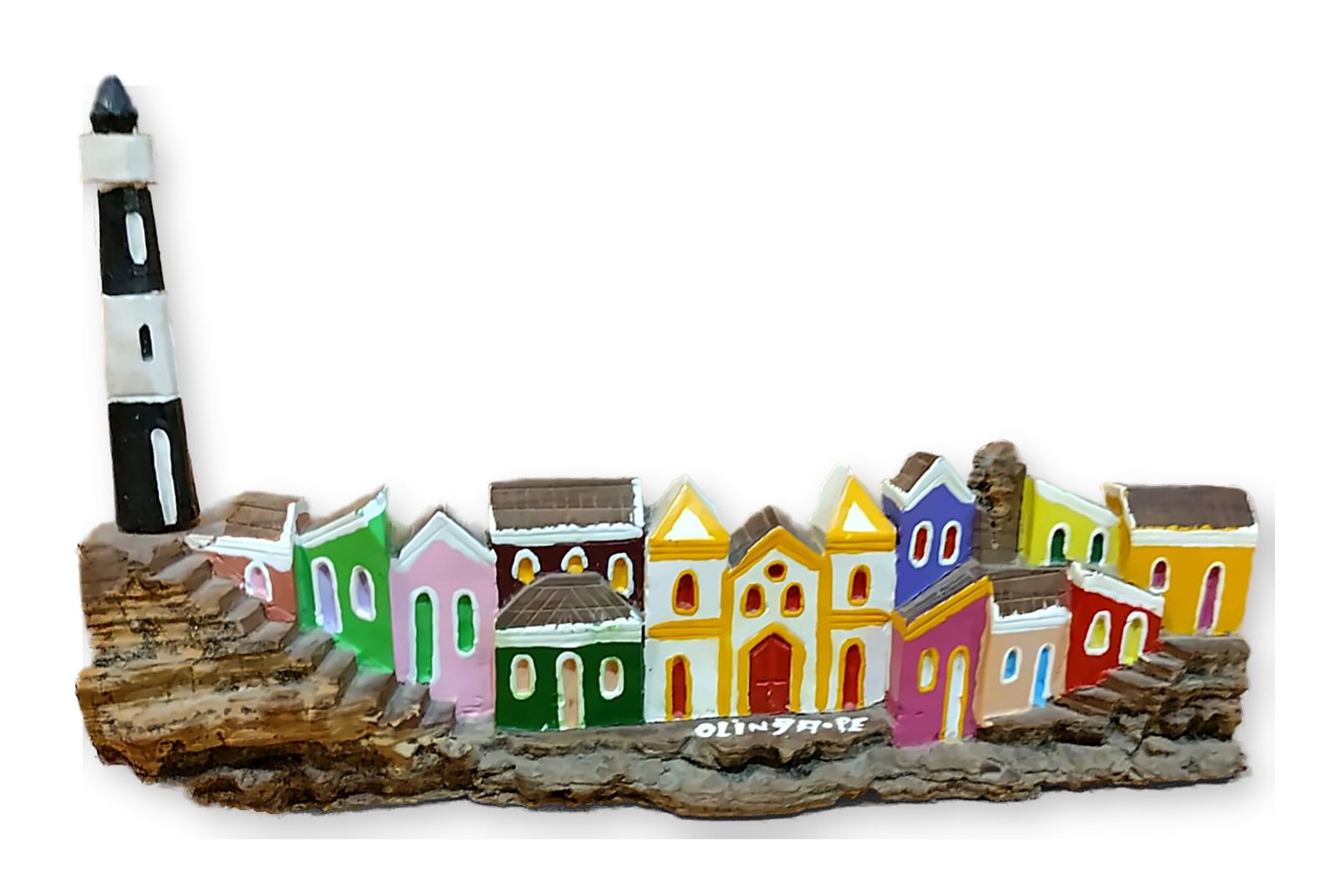
Coming back from Olinda empty-handed was impossible. None of these pieces has much monetary value, but behind each one there are many feelings: who gave it to us, where we found it, what we lived that day. We still have them at home, in the display cabinet, and every time we walk past, we are back there:
- The Barbapapa plate and the Barbapapa painting, with the houses of Olinda behind.
- The little painting of the church on the easel, painted by one of the travelling painters of the Alto da Sé, where Hilário's sister also lives.
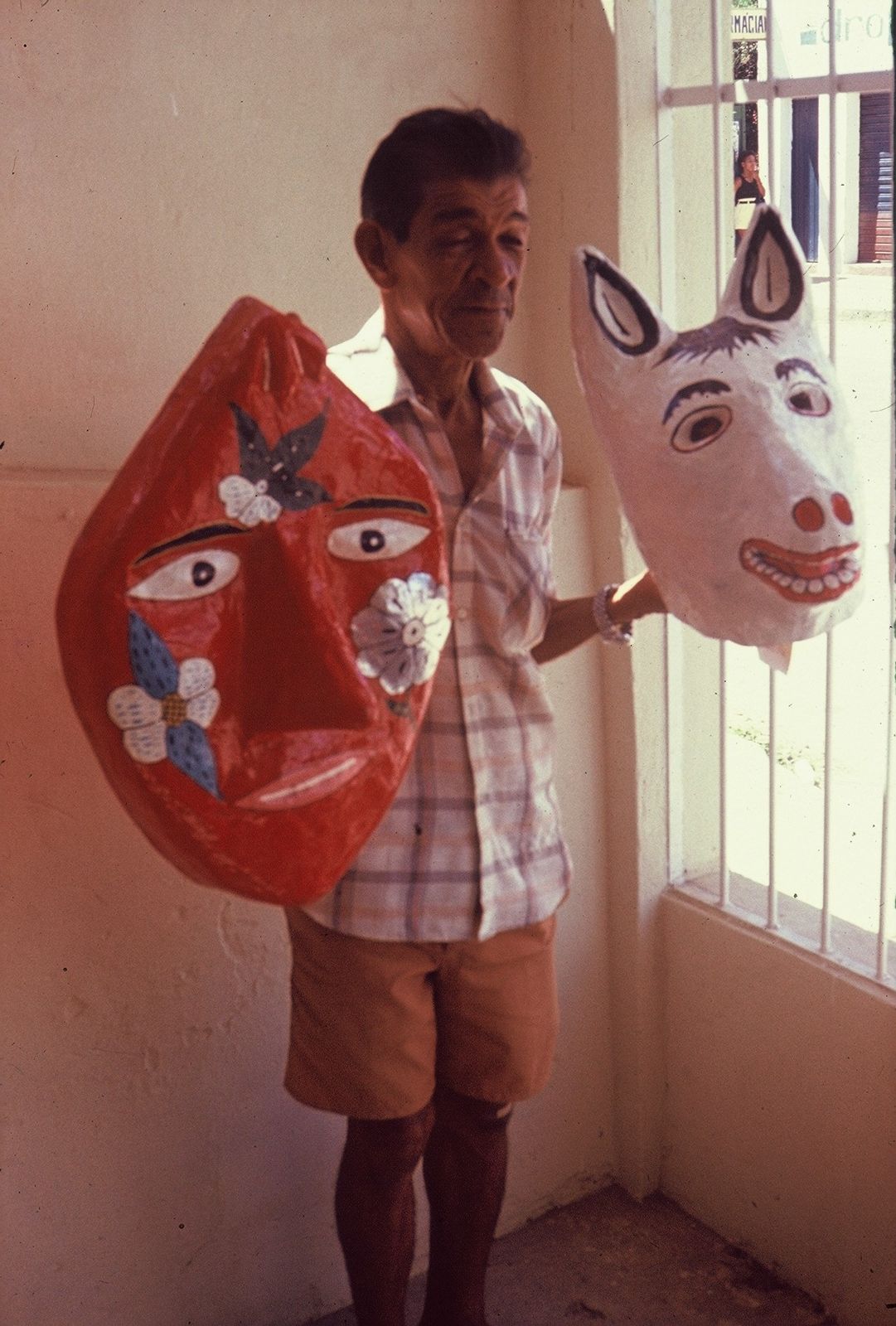
- The frevo mask and sombrinha.
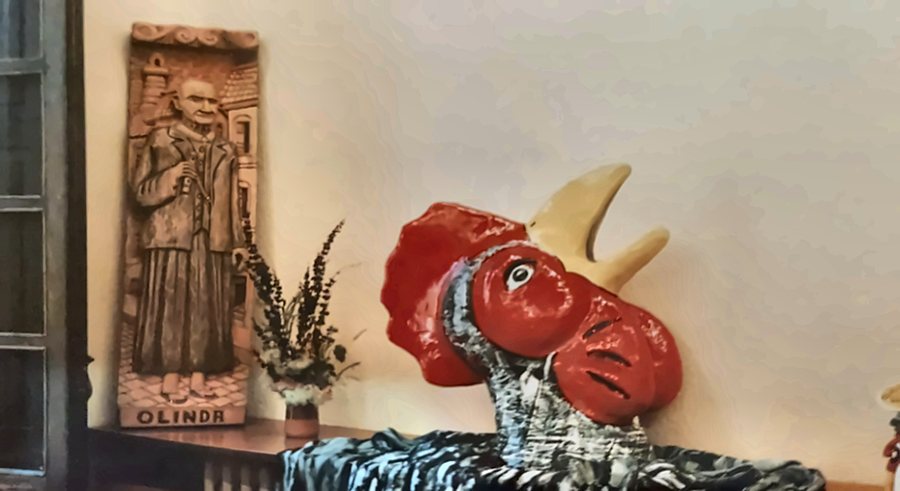
- Olinda carved in wood, with the lighthouse and the coloured houses.
- The Avi Montassell carved in wood and the big-head figure of the Galo.
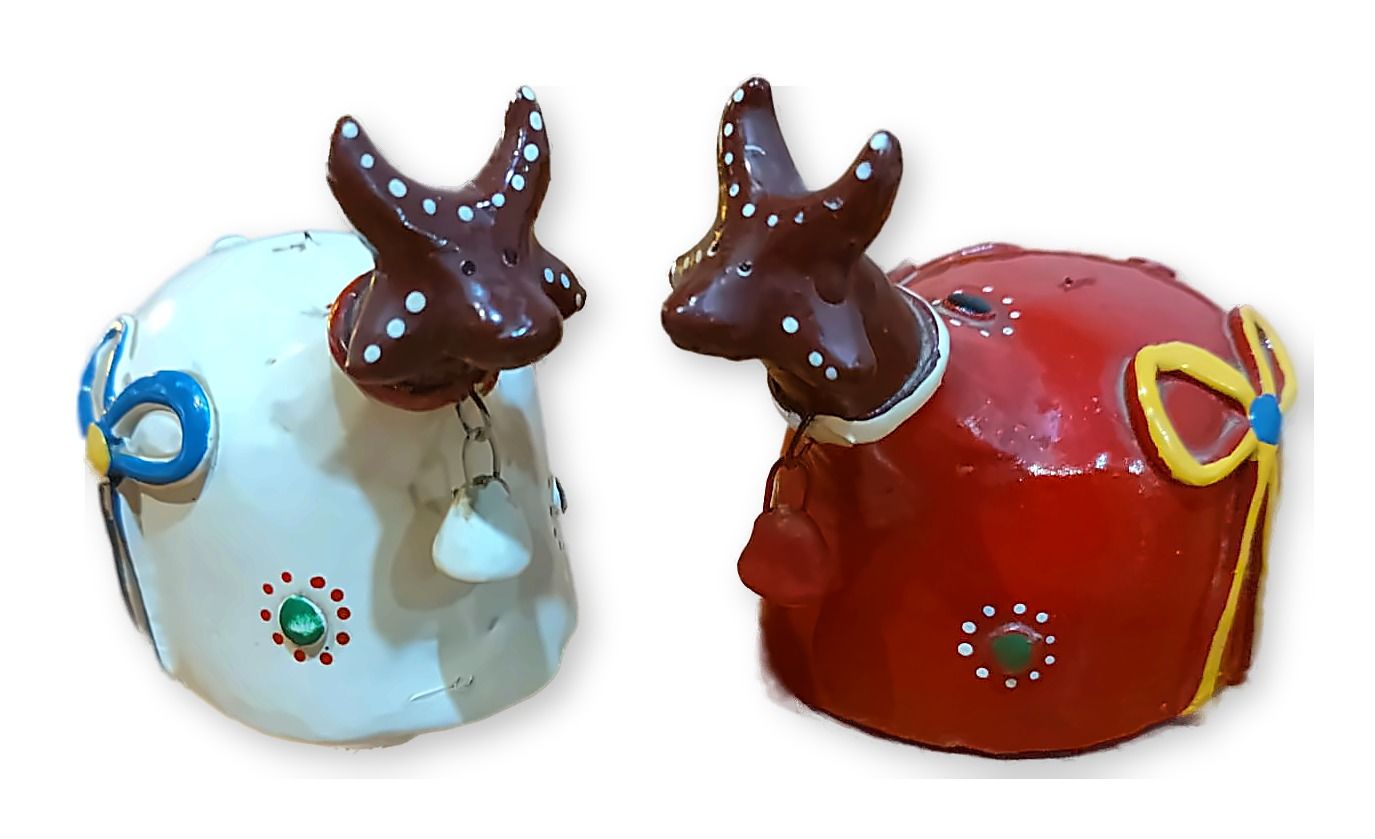
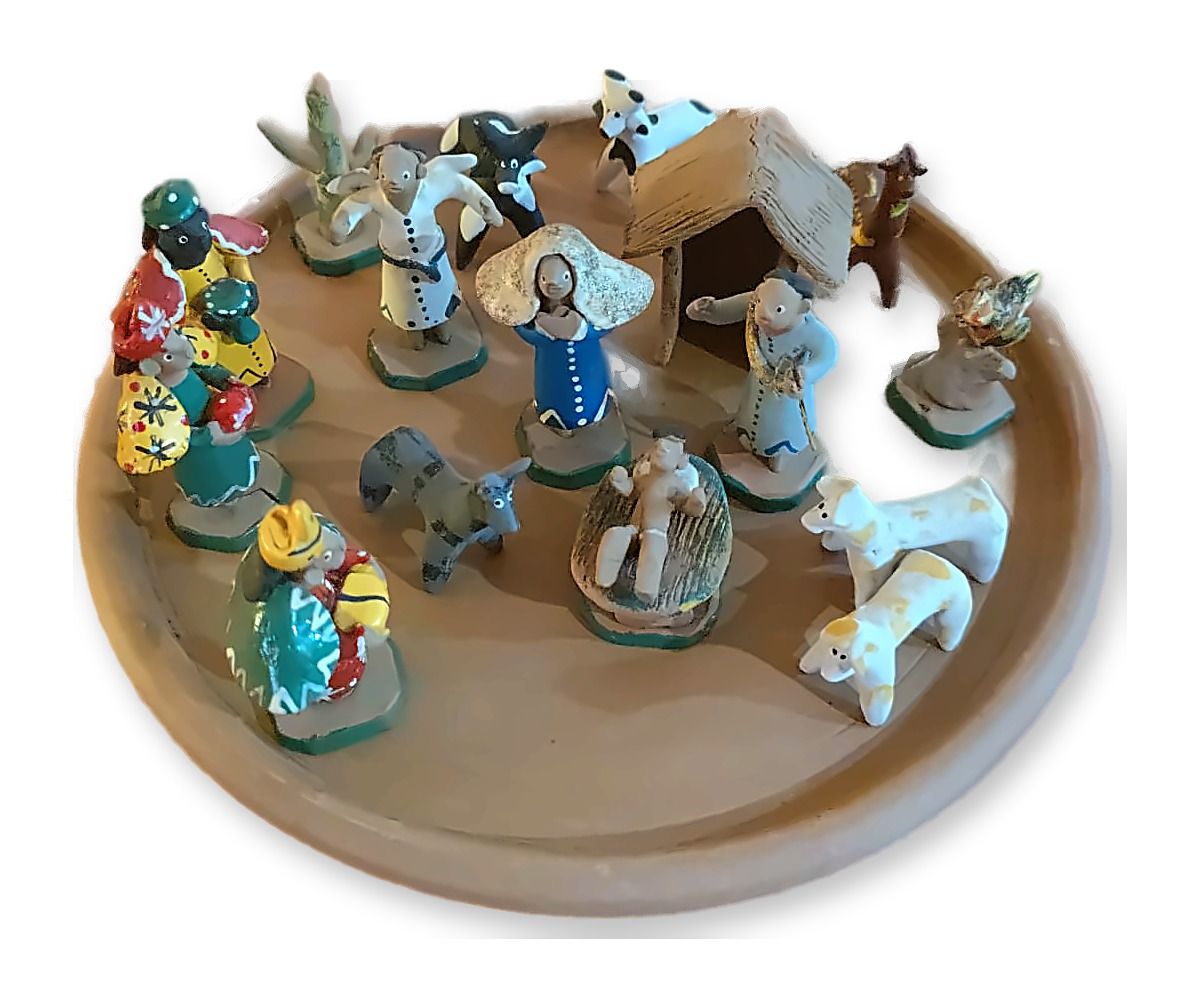
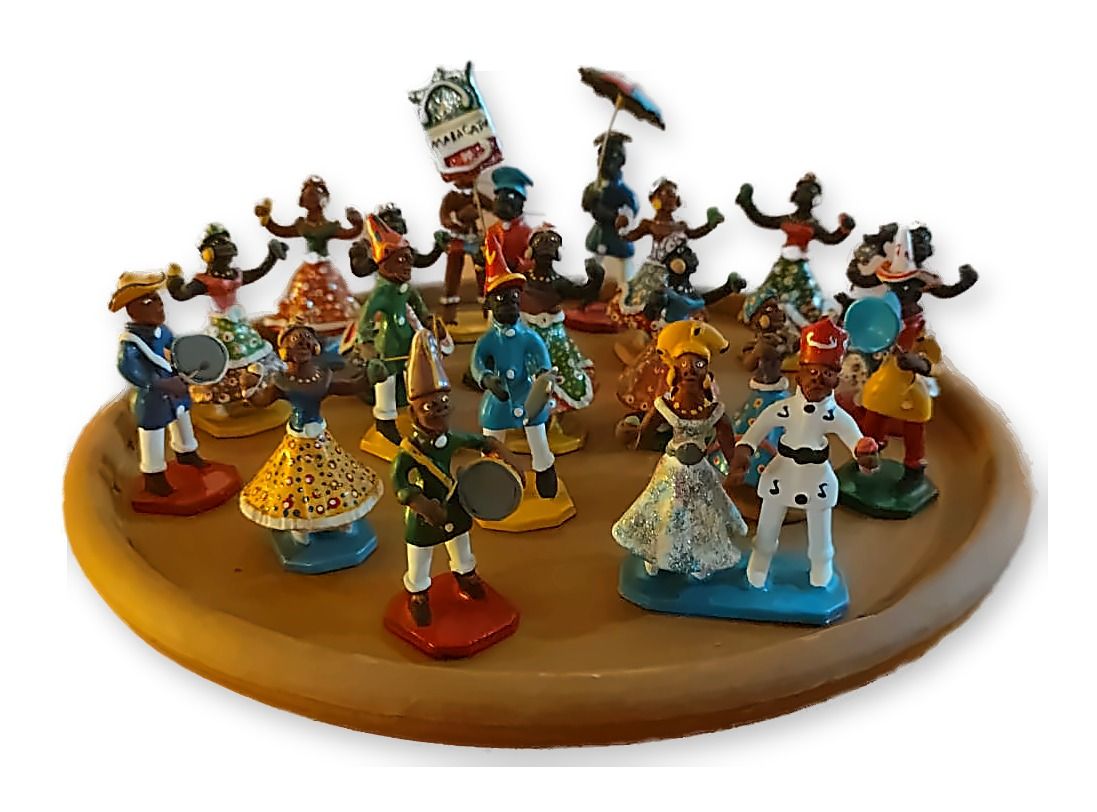
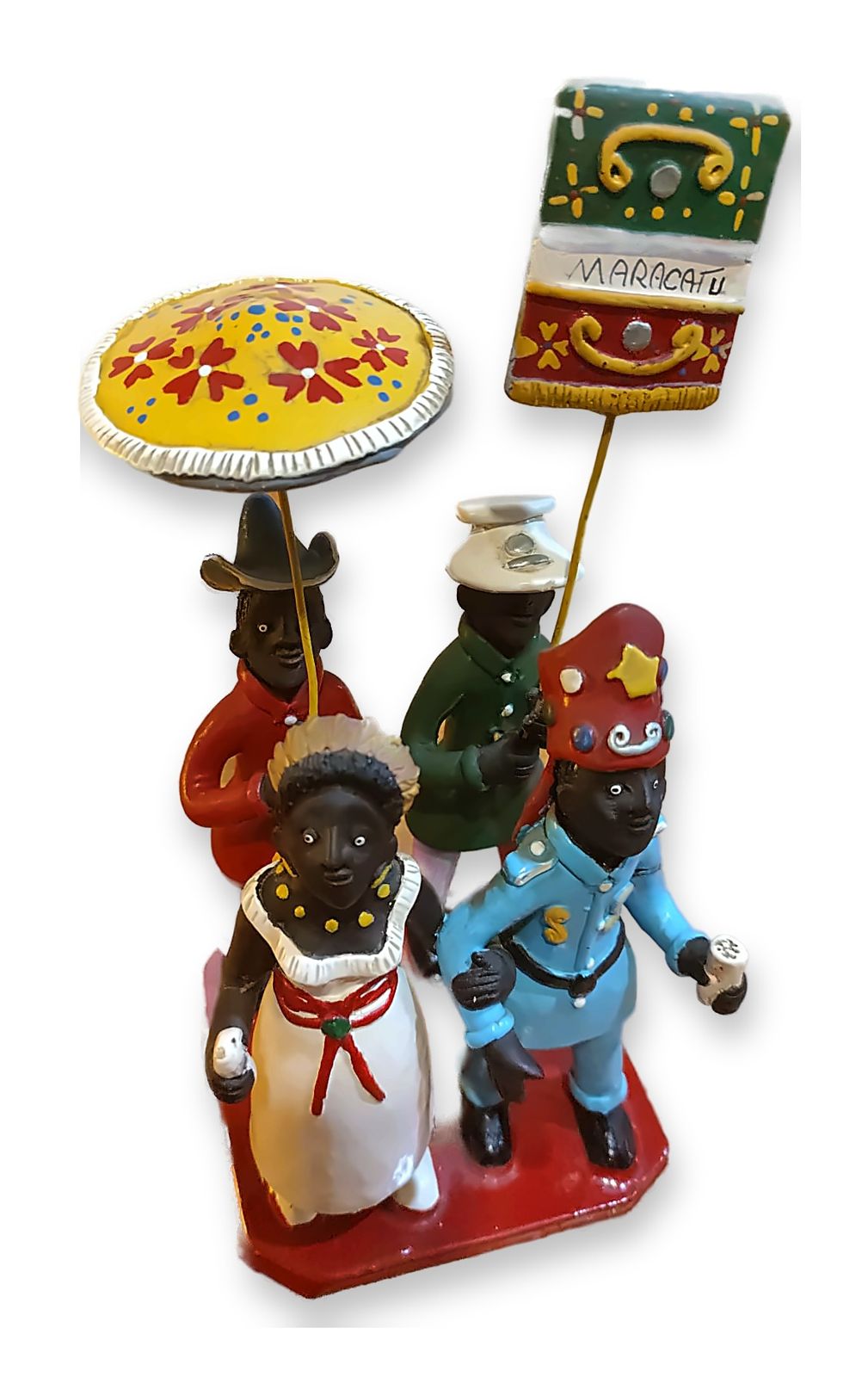
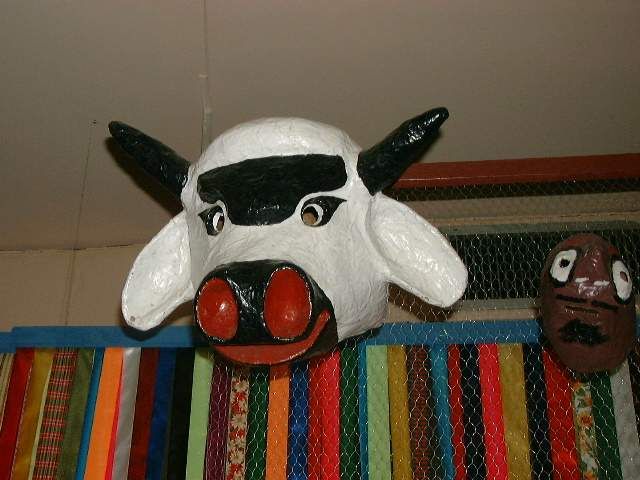
- The clay bois, the clay nativity scene, the carnival figurines and the maracatu group: Pernambuco's clay crafts.
9Gallery
🔍 Tap a photo to see it larger.
More photos of the trip.
Photos: © Dolors Truñó Travesa, except where indicated. Those from the 1980s and 1990s and from 2007-2008, © Thales Galhardo.
10Where to eat and sleep
Our case
We stayed in a private house near the Pousada dos Quatro Cantos, right in the Sítio Histórico. During carnival many people in Olinda leave their homes and rent them out whole, or by the room, to make a bit of money those days.
If you want to go
- Houses and rooms for carnival: today they can be found on Airbnb and OLX. Prices vary a lot and «everything is negotiable»: there are listings of more than 30,000 R$ for a large house for the whole carnival. You must book many months ahead. We have not found any body that manages these rentals.
- Outside carnival, Olinda has many pousadas in the historic centre.
Sources: Airbnb and OLX, consulted in October 2026; Diario de Pernambuco.
Where to eat
We have not been there: these are suggestions from other sources (essemundoenosso.com.br).
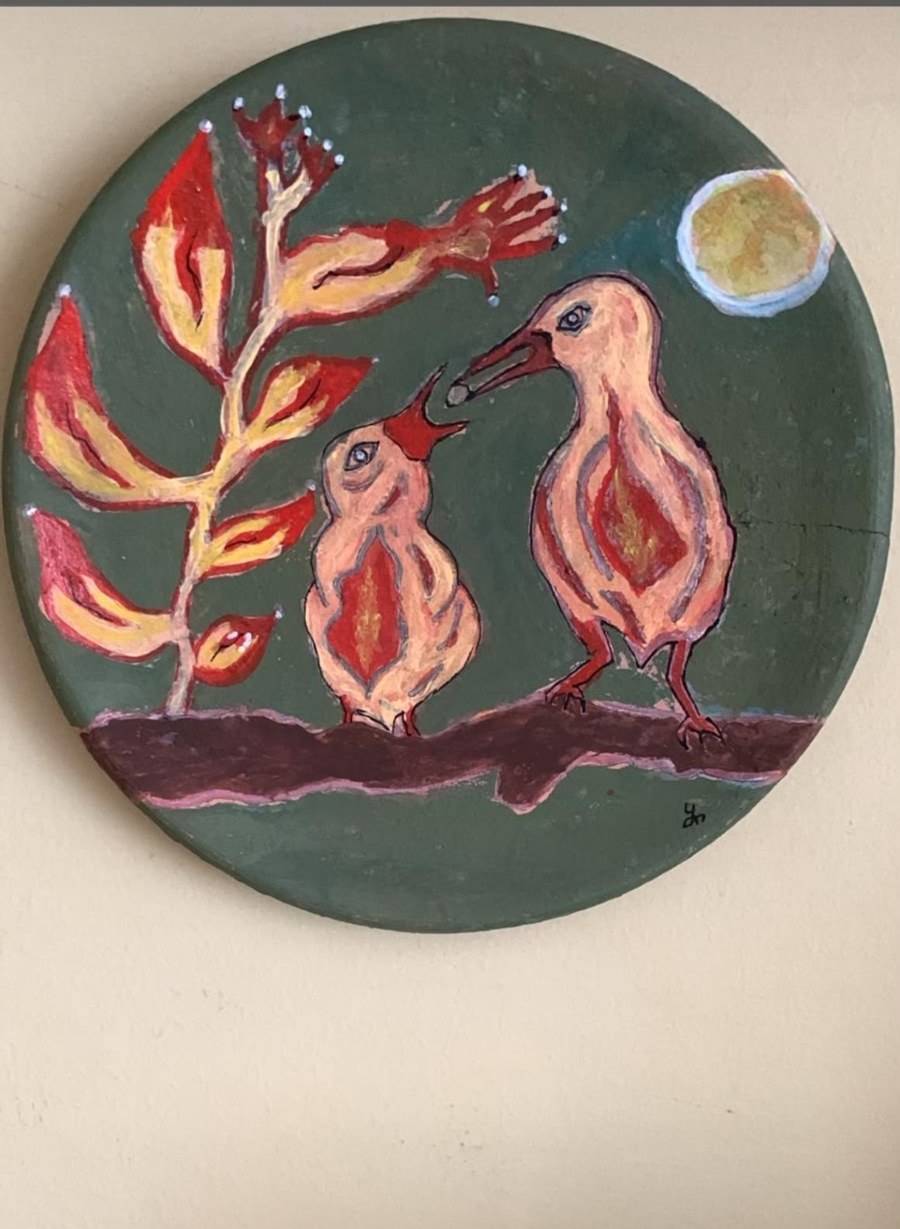
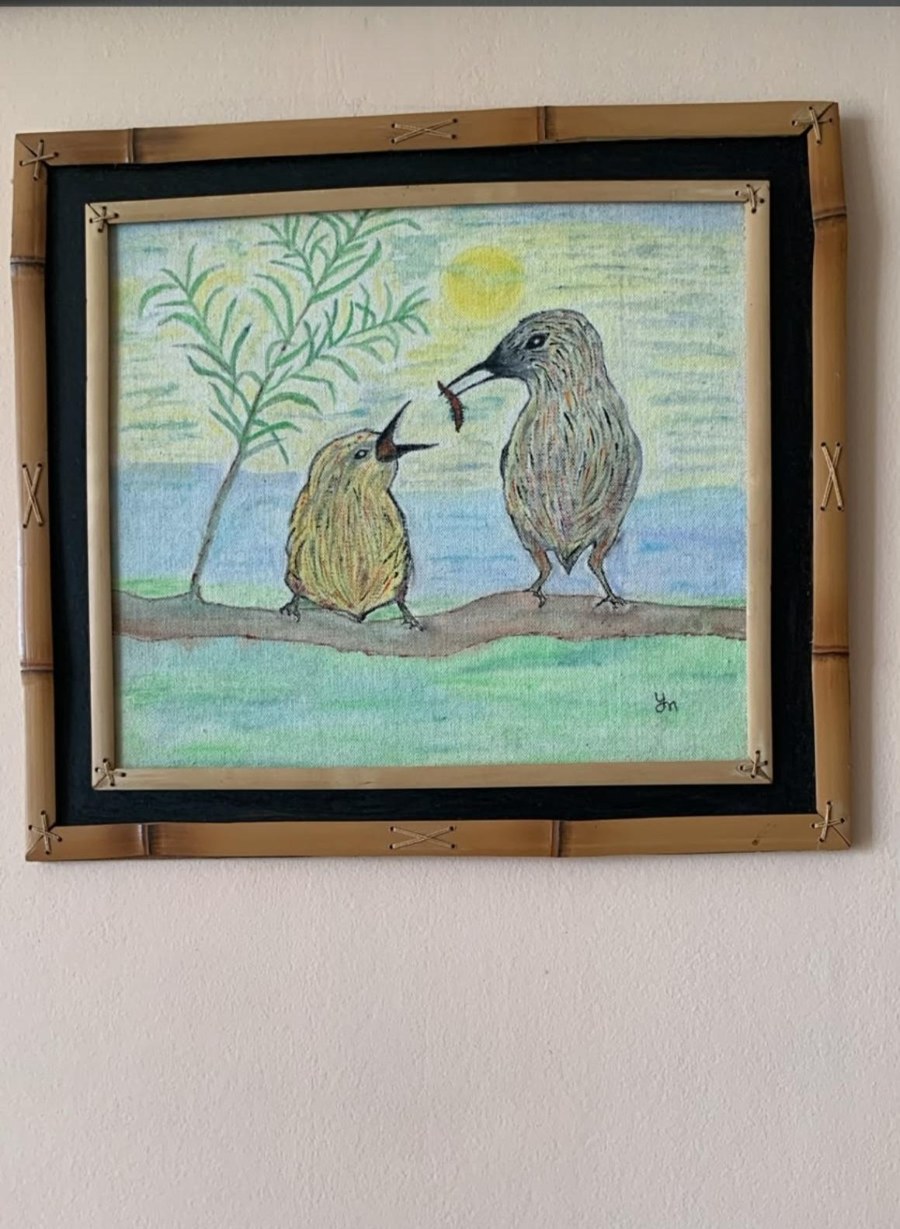
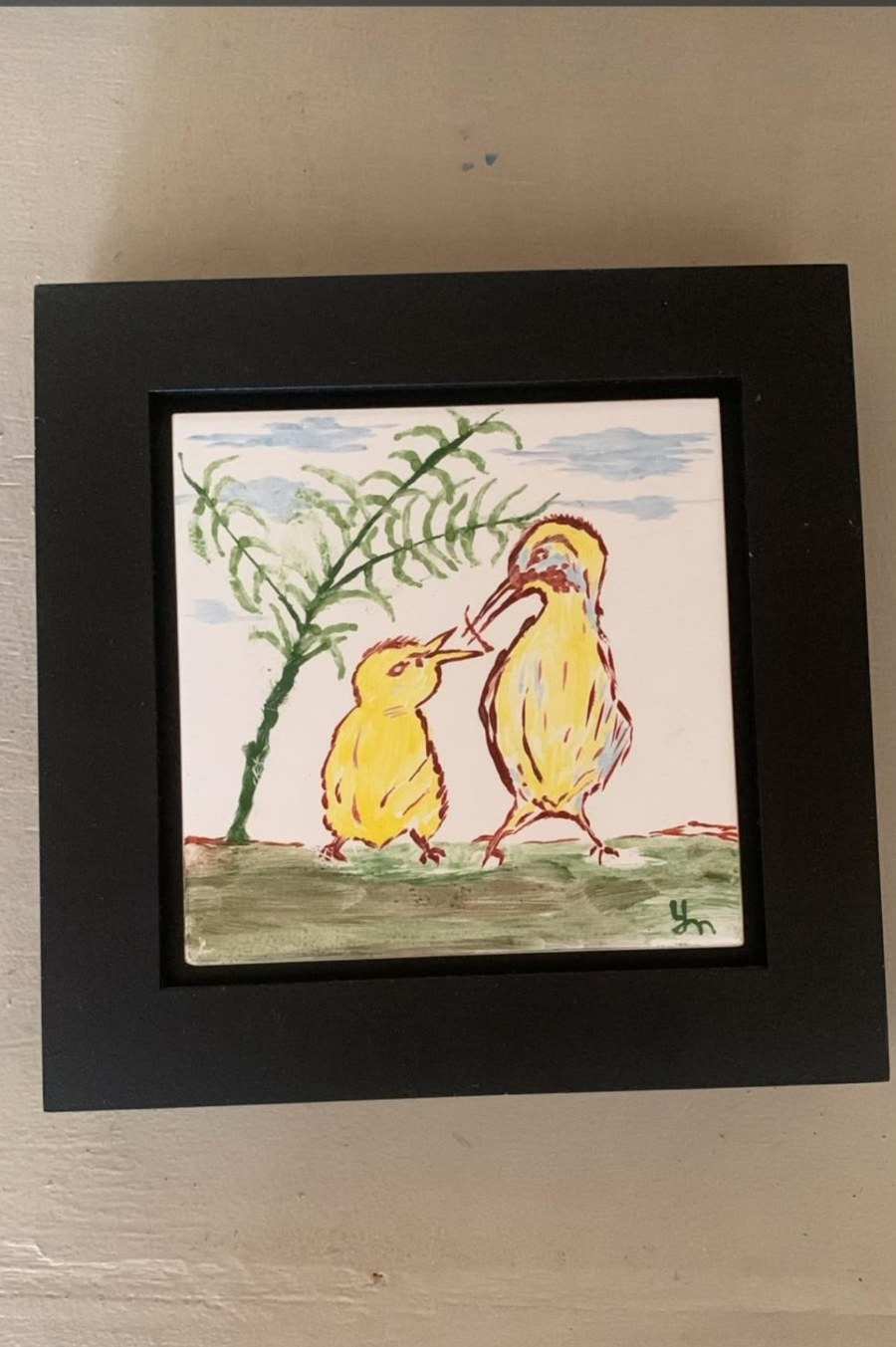
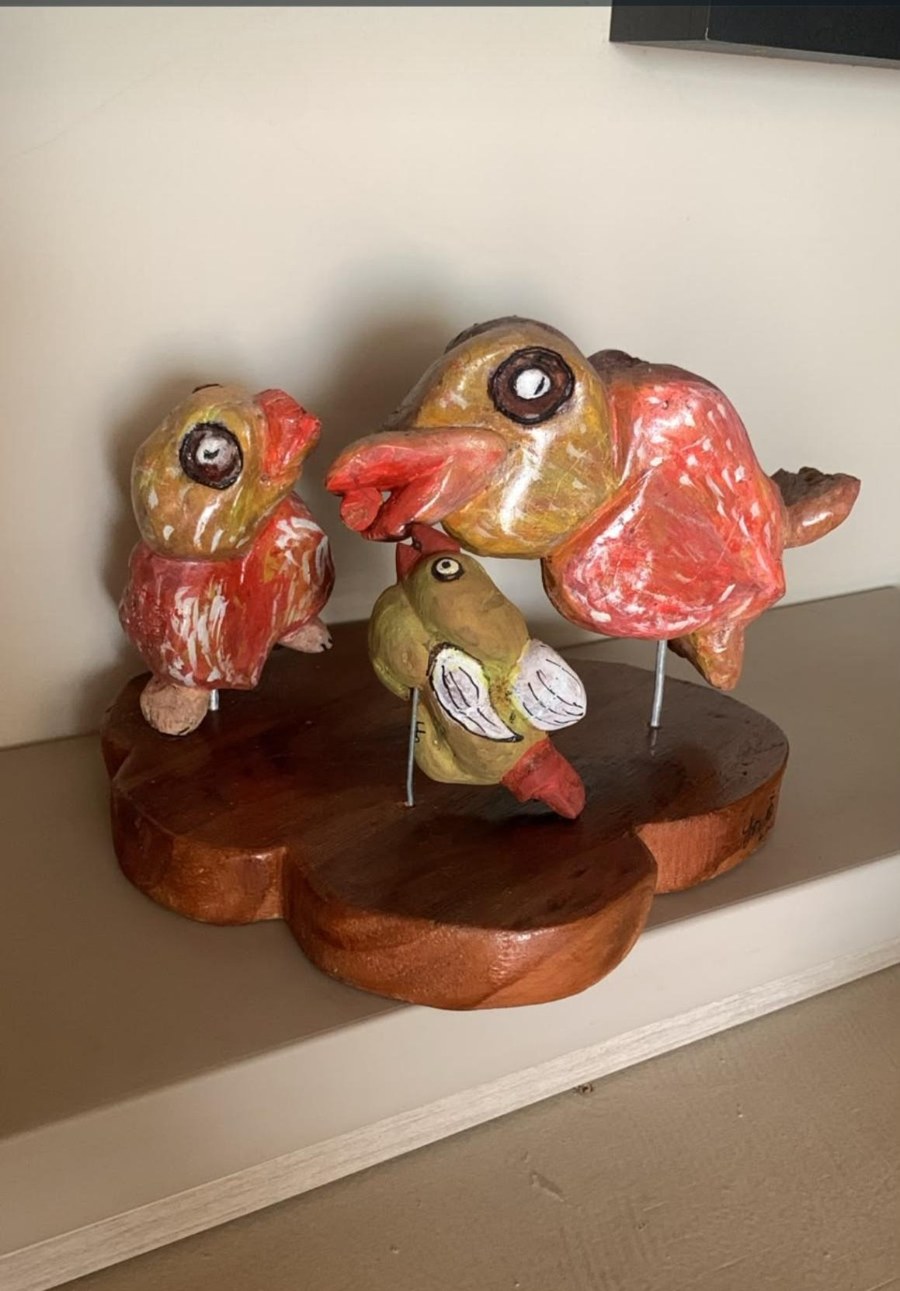
Yara, in love with birds
Yara Nóbrega, an Olinda native, paints birds and also carves them in wood; her exhibition is called «Passarinhando» (acrylic paintings on canvas). One of her favourite themes is what she calls «comida»: a father or mother feeding the chick. She has sent us four works, and we share them here with her permission.
🔍 Tap a photo to see it larger.
11Budget
As on all giant-carrying trips, the Geganters de Vallgorguina paid their own travel to the destination airport, and the host group covered all expenses until they took us back to the airport, including some sightseeing.
If you go on your own, roughly (October 2026 prices, per person):
| Item | Guide |
|---|---|
| Flight Barcelona – Recife with TAP (via Lisbon) | from about €850 return off-season; for carnival, quite a bit more |
| Accommodation for carnival | very variable (see «Where to eat and sleep»); sharing a house, the price per person drops a lot |
| Food | the «comida a quilo» and tapioca are the cheapest way |
| Taxi or ride-hailing airport – Olinda | price to be checked (see «How we got there») |
Rough estimates, October 2026. Check prices before booking.
12Weather and tips
13Nearby
In Olinda almost everything is by bike; on foot, the Sítio Histórico is done without a set route. Wikiloc routes:
- Olinda – Marco Zero – Morro do Peludo (bici) ↗
- Olinda – Boa Viagem (BTT) ↗
- Via Brasiliensis: Olinda – Forte de Pau Amarelo (bici) ↗
- Olinda – Gruta de Nossa Senhora de Lourdes (bici) ↗
- Itamaracá – Vila Velha, «Trilha dos Holandeses» (on foot, 13.2 km, moderate, by the beach) ↗
- Itamaracá (MTB, 41.5 km, +383 m, moderate) ↗
Before setting out, check the distance and difficulty of each route.
14Sources, links and phone numbers
- Prefeitura de Olinda (olinda.pe.gov.br): carnival, figures and security.
- Galo da Madrugada: 2026 figures (Poder360).
- Brasil de Fato (07/10/2022): origin of the giant bonecos in the sertão of Pernambuco.
- UNESCO: Historic Centre of Olinda (1982) and frevo (2012).
- Forte Orange: Portuguese Wikipedia.
- Restaurants: essemundoenosso.com.br. Rentals: Airbnb, OLX, Diario de Pernambuco.
- Flights: TAP Air Portugal.
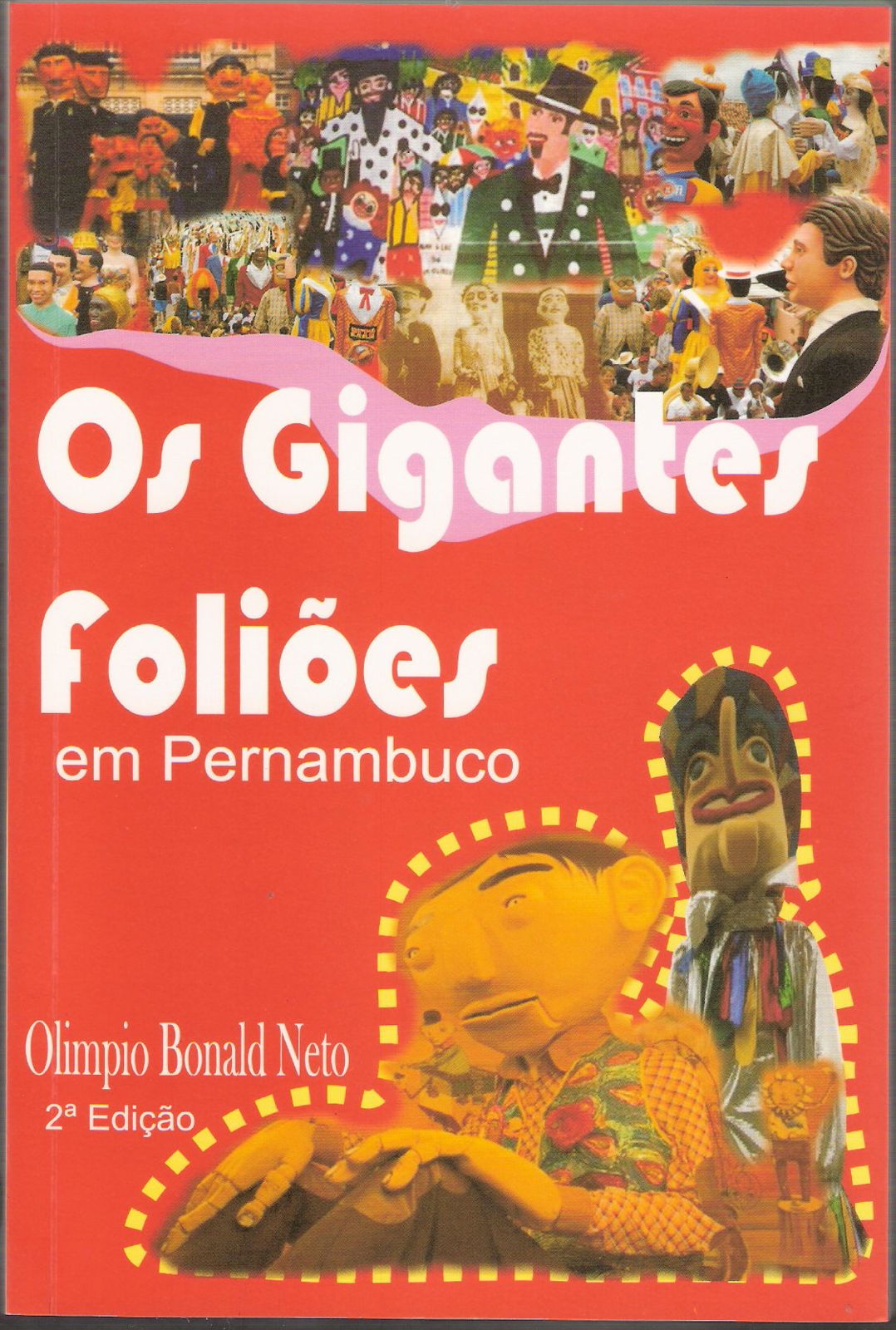
- To learn more: Olímpio Bonald Neto, Os Gigantes Foliões em Pernambuco.
Useful phone numbers (Brazil)
| Police | 190 |
| Ambulance (SAMU) | 192 |
| Fire brigade | 193 |
From a foreign mobile they are dialled the same way, without a prefix.
Music: «Frevo de Claude» and «Maracatu de Claude» (they play one after the other, on a loop)
Jaume López Puigbó · info@100rutas.com · Trip made in February 2002 · Updated: 10/11/2026